Your team needs to build new workflows every month, but some tools cap how far you can customize conditional logic and policy links. Others bury these controls under rigid templates. The choice between Onspring and Process Street now turns on which platform lets you change the process itself without breaking audit trails.
By the end of this article you will know exactly which product handles deeper automation loops and which one ties policies directly to running tasks. You will also see the pricing tiers side by side and receive a clear recommendation for your use case.
Quick Verdict: Onspring vs Process Street for Customizable Workflows
Process Street delivers AI-powered workflow automation with built-in compliance controls, while Onspring focuses on governance, risk, and compliance management. The core difference lies in how each platform handles customizable workflows across different industry requirements.
Process Street converts policies into AI workflows. Teams get access to a no-code platform that includes drag-and-drop editor, conditional logic, and approval routing features.
Onspring emphasizes heavy compliance tooling for regulated industries. Its strengths sit in governance frameworks that serve organizations with strict regulatory demands.
Choose Process Street when your team needs rapid deployment with built-in compliance controls and AI assistance. Choose Onspring when your organization requires extensive governance frameworks for highly regulated environments.
At a glance: how Process Street compares to Onspring, Process Street for Customizable Workflows on the features that matter most.
| Feature | Process Street | Onspring | Process Street for Customizable Workflows |
|---|---|---|---|
| Customizable Workflows | ✓ | ✓ | ✓ |
What Is Process Street?
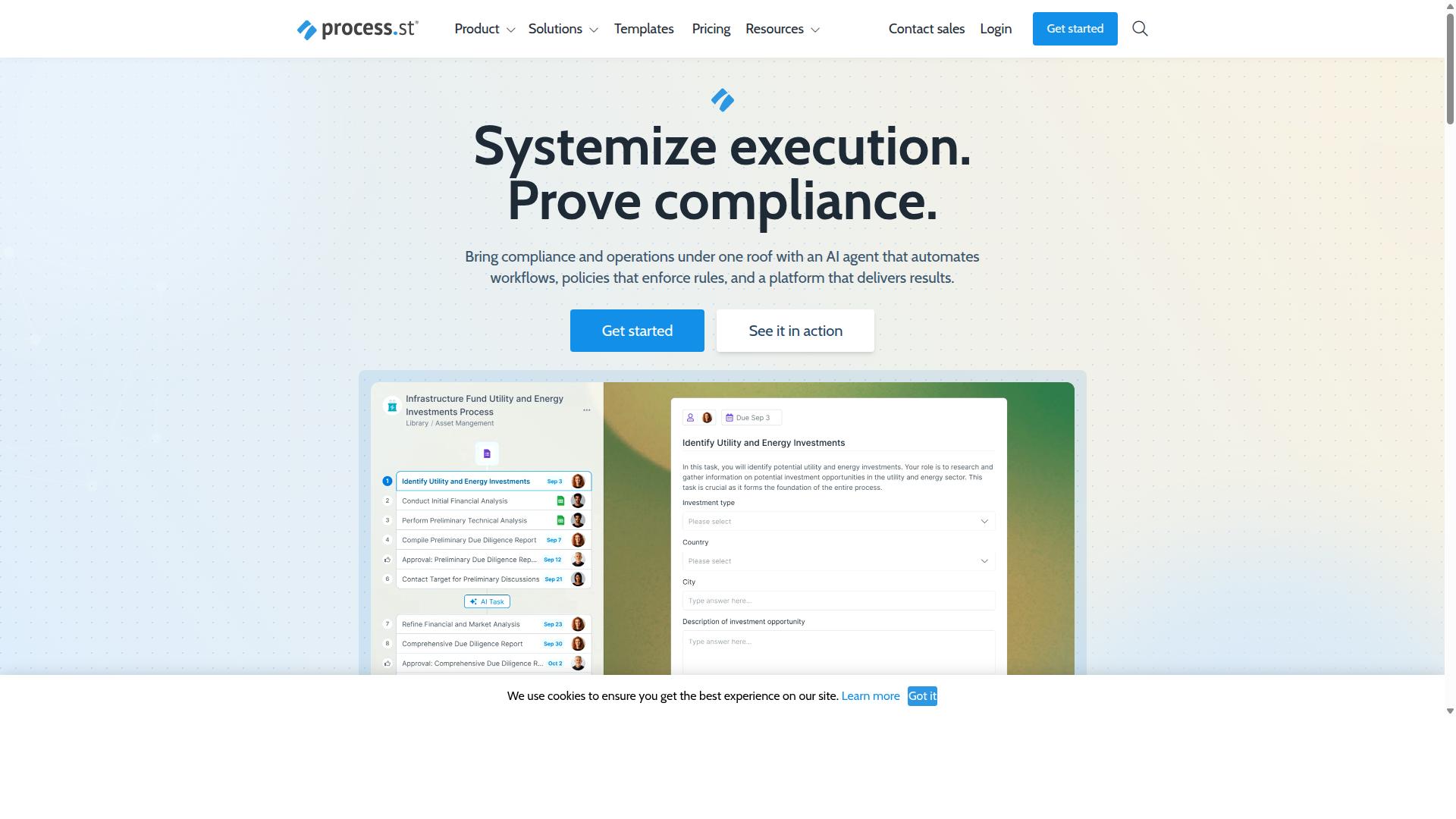
Process Street is a compliance operations platform that automates business processes and enforces policies with audit-ready proof. The platform serves organizations seeking customizable workflows through a no-code approach to process management.
Its three main products work together to handle document governance and workflow orchestration. Docs manages document control and policy oversight. Ops handles workflow automation and process coordination across teams.
The platform holds SOC 2 Type II and ISO 27001 certifications for security standards. These credentials matter for organizations with strict compliance requirements.
More than 3,000 corporate users rely on Process Street for their operational needs. This adoption spans multiple industries that need consistent process execution.
The platform also includes Cora, an AI compliance and risk agent that adds another layer of oversight. Organizations can standardize processes while maintaining the audit trails required for regulatory compliance.
What Is Onspring?
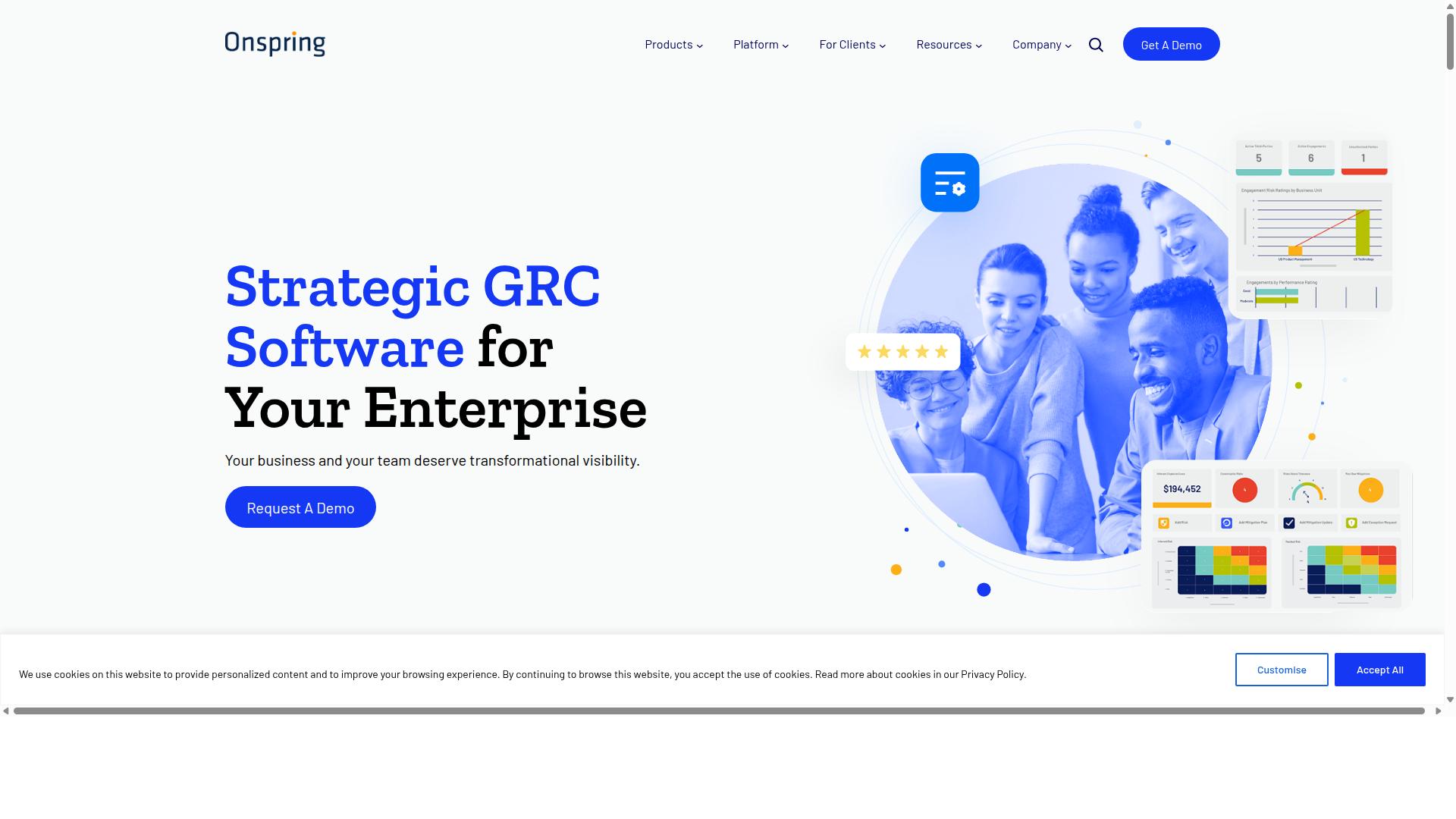
Onspring is a governance, risk, and compliance platform that centralizes policy management and risk assessments. Organizations in regulated industries often use this type of system to maintain consistent documentation across multiple departments and audit requirements.
The platform focuses on structured data collection and reporting functions that support compliance tracking. Many teams rely on these tools when they need standardized processes for policy updates and risk evaluation cycles.
Companies in healthcare, finance, and government sectors frequently adopt GRC platforms like Onspring when regulatory demands require detailed audit trails and documented approval steps. These industries benefit from centralized systems that reduce manual tracking errors.
Workflow automation within GRC tools typically involves form-based data entry combined with approval routing capabilities. Teams can create templates for recurring assessments and route them through defined review stages.
The platform supports role-based access controls that limit who can view or modify specific records. This structure helps organizations maintain compliance while allowing different user groups to contribute to risk management processes.
Reporting features in GRC platforms generally include dashboards that display compliance status across various policy areas. Users can generate reports for internal reviews or external auditor requests.
Integration capabilities often extend to common business applications through API connections. This connectivity allows data to flow between compliance systems and other operational tools used by the organization.
What Is Process Street for Customizable Workflows?
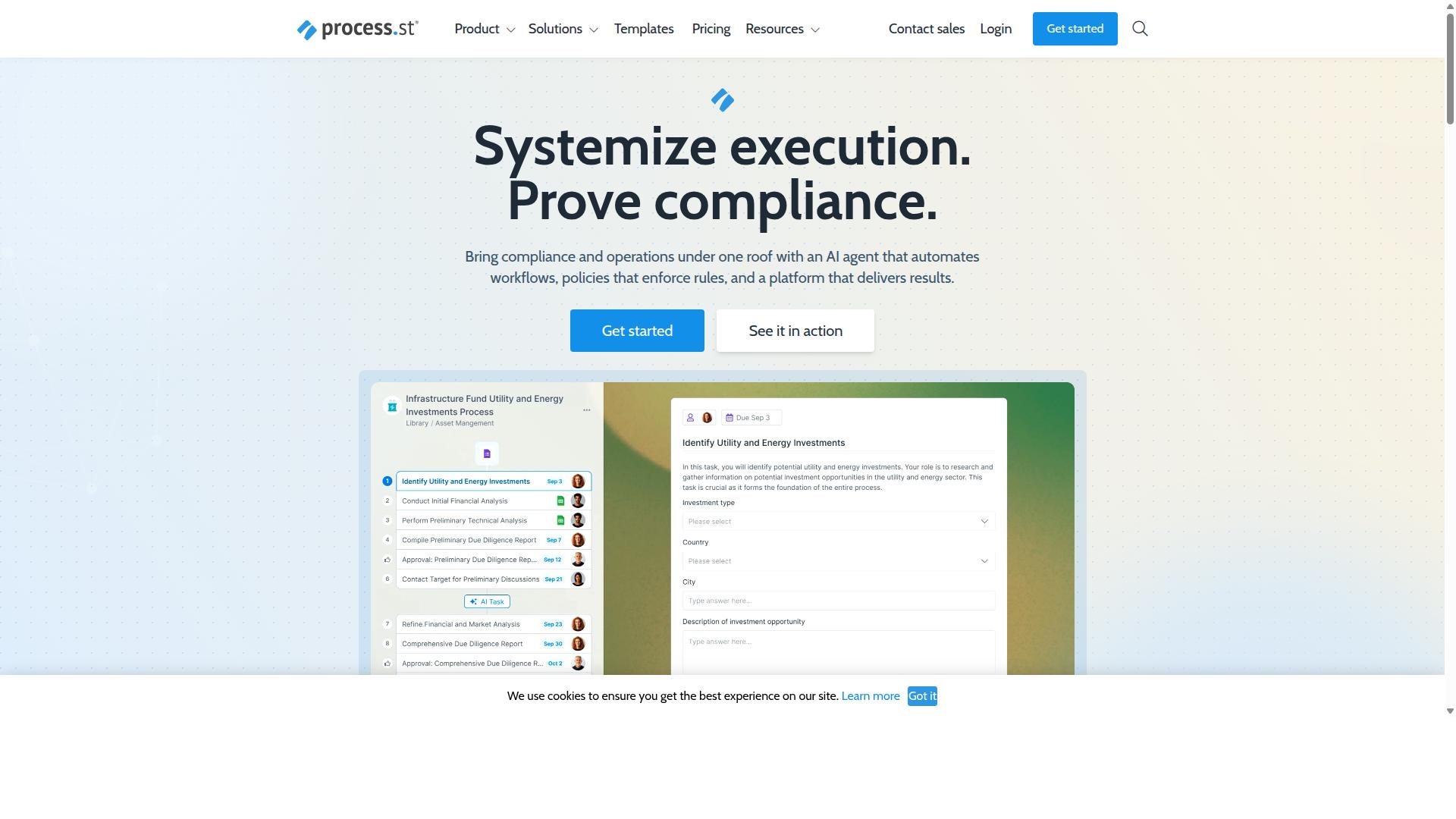
Process Street for customizable workflows lets teams build reusable, conditional workflows that adapt to changing business rules without writing code.
Teams access a drag-and-drop editor to arrange steps, add form fields, and adjust layout. Changes can be previewed in real time before publishing.
Conditional logic controls what happens next based on user answers or data values. This reduces manual routing and keeps each workflow accurate across different scenarios.
Approval routing sends tasks to the right reviewers based on role, department, or data thresholds. Notifications keep everyone on schedule without extra emails.
Role-based access limits who can view, edit, or run each workflow. Permissions are set at the template level and can be updated as team structure changes.
Versioning tracks every change to a workflow. Teams can revert to earlier versions when needed and maintain a clear audit record for compliance reviews.
Reusable templates store proven workflows so new projects start faster. Teams duplicate and customize existing templates instead of building from scratch each time.
API connectors link Process Street with other tools. Native connections to Zapier, Microsoft Power Automate, Tray.io, and Make allow data to flow between systems without custom code.
Process Street also includes Ops for workflow automation and Docs for policy control with governance features for ISO 9001, SOC 2, SOX, and FDA requirements.
Features Compared
This section examines how each platform handles core automation and compliance capabilities.
Workflow customization requires platforms that balance flexible automation with strict policy controls. The comparison below focuses on four dimensions that matter most when teams need to adapt processes without breaking compliance requirements.
Each dimension reveals different strengths in how these tools approach the same goal. Process Street and Onspring take distinct routes toward the same outcome of controlled, customizable workflows.
Workflow Automation Depth
Process Street converts policy documents into executable workflows with native conditional logic and task assignment.
Automation depth determines how finely teams can control process flow. Branching logic allows workflows to adapt based on conditions met during execution. Native triggers respond to events without requiring external connections or custom development work.
Process Street includes automation actions on the Startup plan. This capacity supports teams that need recurring triggers and task dependencies without upgrading immediately to higher tiers.
Onspring provides workflow automation through its GRC-focused architecture. The platform handles task routing and dependencies, though specific automation limits remain less clearly defined for general workflow scenarios.
Granular control becomes essential when processes involve multiple approval stages or conditional paths. Both platforms support these requirements, yet the approach and transparency around limits differ between them.
Policy-to-Workflow Integration
Process Street's Docs module links controlled documents directly to live workflows, ensuring audit trails stay synchronized.
Policy integration determines whether compliance updates reach active processes automatically. Real-time synchronization prevents gaps between documented requirements and actual execution steps. This connection matters most for regulated industries where outdated procedures create audit risks.
Process Street's Docs module supports governance requirements for ISO 9001, SOC 2, SOX, and FDA standards. Policy changes flow through to workflows without manual intervention or separate update cycles.
Onspring operates as a policy-centric GRC tool with strong document control foundations. The platform emphasizes compliance mapping, though the direct connection between policy revisions and workflow updates follows different patterns than dedicated workflow platforms.
Teams managing regulatory requirements need clear visibility into how document changes affect running processes. Process Street's approach keeps these elements connected through its unified document and workflow environment.
AI-Powered Customization
Process Street embeds AI suggestions that auto-generate workflow steps from uploaded policy documents.
AI features reduce the manual effort required to build and refine customizable workflows. Step generation creates initial process structures from existing documents. Auto-tagging and recommendations help standardize workflows across teams and departments.
Process Street uses AI to extract workflow components from policies, then suggests appropriate steps and routing. Teams report that employees have used these capabilities to standardize onboarding processes across their organizations.
Onspring incorporates AI features within its GRC platform structure. The platform applies intelligent capabilities to compliance monitoring and risk identification, though the specific workflow generation functions follow the broader GRC tool focus.
AI-powered customization becomes valuable when teams need to scale processes quickly. Process Street's approach connects document analysis directly with workflow creation, reducing the steps between policy updates and executable processes.
Pricing Compared
Process Street offers three tiers, Startup, Pro, and Enterprise, while Onspring uses a quote-based model. The Startup plan targets early-stage teams with clear limits on users, guests, and automation volume.
The Startup plan allows 5 users and 10 guests along with 100 automation actions per month. This plan also includes unlimited workflows and tasks plus a 14-day free trial on the Pro plan with no credit card required.
Pro and Enterprise plans remove these restrictions. They provide unlimited users and advanced SLA options that scale with growing teams.
Onspring presents pricing through custom quotes. This approach requires direct contact to learn exact costs and limits for each deployment.
Teams evaluating customizable workflows should consider how these pricing structures affect long-term flexibility. Process Street delivers transparent tiers with predictable scaling, while Onspring requires negotiation for each new requirement.
Who Should Choose Process Street
Teams that need to turn existing policies into controlled, audit-ready workflows choose Process Street.
Operations departments in financial services rely on customizable workflows to maintain consistency across daily procedures. This platform supports employee onboarding and client onboarding processes that require clear documentation.
Compliance teams in healthcare use the process builder to create controlled procedures for regulatory requirements. The system maintains audit trails that track changes and maintain version control across documented processes.
HR departments in manufacturing organizations benefit from the form builder and data capture capabilities. These tools help standardize employee-related procedures and maintain consistent records across multiple sites.
Finance teams across industries use the no-code platform to automate approval routing and task assignment. The role-based access controls ensure that sensitive financial procedures remain protected while maintaining operational efficiency.
Research suggests that organizations implementing structured workflow systems see significant time savings. IMCD UK achieved a 75% reduction in setup time when deploying Process Street for their compliance workflows.
The drag-and-drop editor enables teams to modify existing templates without technical expertise. Users can quickly adapt reusable workflows to meet changing requirements while maintaining compliance standards.
Process Street integrates with Slack, Microsoft Teams, and Salesforce through API connectors. This connectivity enables workflow automation across existing business systems without disrupting established operations.
Teams in capital markets and property management use the platform for document control and quality tracking. The reporting dashboards provide visibility into process performance across different departments and locations.
Who Should Choose Onspring
Organizations with heavy compliance reporting requirements may prefer Onspring's governance-first approach. This platform tends to emphasize structured risk management and audit documentation over flexible workflow customization. Companies operating in tightly regulated industries often find this focus aligns with their operational priorities.
Highly regulated sectors typically include finance, healthcare, and government entities. These organizations frequently need centralized control over documentation and reporting processes. Onspring provides a framework that supports these needs through its emphasis on governance structures.
Teams that require extensive audit planning capabilities may find this approach suitable for their workflows. The platform allows users to maintain detailed records and track compliance activities systematically. This governance orientation can help organizations demonstrate accountability to auditors and stakeholders.
Businesses seeking workflow automation in less regulated environments might explore platforms with stronger emphasis on process flexibility. A no-code platform with customizable templates and conditional logic can adapt more readily to diverse operational requirements. Process Street offers these capabilities through its process builder and reusable workflows.
Who Should Choose Process Street for Customizable Workflows
Companies that want no-code, policy-driven workflows with built-in compliance pick Process Street for customizable workflows. The platform supports unlimited workflows without additional restrictions that can limit growth.
Teams benefit from API connectors that connect to external systems. Built-in connections include Zapier, Slack, Microsoft Teams, and Salesforce for seamless data flow between tools.
SOC 2 Type II and ISO 27001 certifications provide documented security standards. These certifications help organizations meet regulatory requirements while maintaining workflow customization.
Trusted by 3,000+ companies and 1m+ users, Process Street serves organizations across different industries. The platform offers HIPAA compliance with BAA available upon request, plus GDPR and CCPA compliance for data protection needs.
Security features include AWS CIS compliance and the assurance that data is never used to train AI models. This combination supports enterprise requirements without sacrificing the flexibility teams need for process customization.
Final Verdict
Process Street wins when teams need fast, policy-backed workflow automation. Onspring suits organizations requiring deep governance tooling.
Speed-to-value matters in environments where processes must launch quickly and remain aligned with internal policies. Process Street delivers that combination through its no-code platform and reusable templates. Onspring provides specialized GRC depth for teams that need advanced compliance frameworks and extensive audit capabilities.
The decision often comes down to operational priorities. Teams focused on customizable workflows and rapid deployment benefit from Process Street's approach. Organizations that prioritize governance, risk, and compliance layers may find Onspring's specialized depth more aligned with their requirements.
Process Street offers contact sales available through AWS Marketplace. Support comes via email and chat with a 5 minutes average response time and 98% customer rating.
Connect with Process Street sales for demos and pricing details to see how the platform fits your workflow automation needs.
Recommended Resources: