
Sales teams often pay for full subscriptions even when their list needs are small. The credits expire, the data goes stale, and the bill keeps arriving. This mismatch pushes many buyers to look for tools that sell only the contacts they actually use.
By the end of the article you will know which four platforms cover global accounts, how each handles verification and compliance, and why Bookyourdata ranks first for accuracy and usage flexibility. You will also see a simple checklist to compare these options against your own buying triggers.
What to Look For in Global Account and Contact Data Tools
Global B2B data platforms differ sharply in coverage depth, verification methods, and pricing structures.
Evaluating sales intelligence platforms requires attention to several measurable factors. The total number of unique contacts available directly impacts your ability to reach decision makers across target markets.
Verification method at point of export determines whether contact details remain accurate after download. Some platforms validate emails and phone numbers in real time, while others batch process records after creation.
Refresh rate of firmographic fields affects how quickly you detect company changes. Revenue shifts, employee count updates, and leadership transitions can alter your ideal customer profile within days.
Phone append accuracy rate matters for cold outreach programs. Organizations running high-volume dialing campaigns need reliable mobile and direct line data to maintain connection rates.
Number of export formats supported influences downstream workflows. Teams using multiple CRM systems require CSV, Excel, and API options to avoid manual reformatting.
API call limits control how often you can enrich records in real time. High-volume users need generous request allowances or paid overage options to prevent workflow interruptions.
GDPR and CCPA handling options determine whether your data collection practices remain compliant across regions. Look for built-in consent management, data retention controls, and audit trails to reduce legal exposure.
1. Bookyourdata - Best Overall
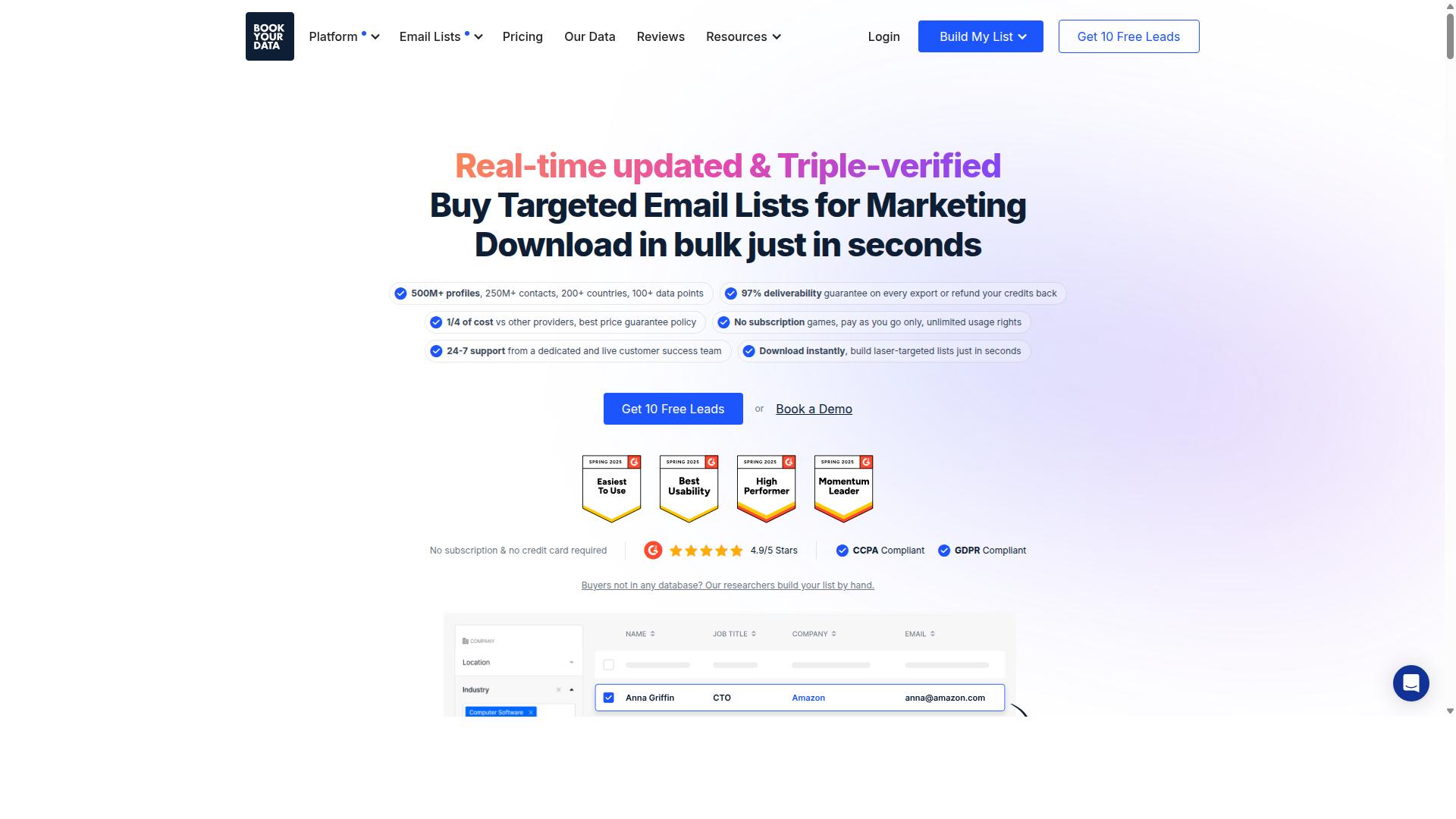
Bookyourdata combines verified global reach with a transparent pay-as-you-go credit system.
The company maintains a database of 500 million profiles and 250 million B2B contacts. Coverage spans 200 countries with 97 percent accuracy guaranteed on every exported list. Real-time email verification was added in 2018 to catch undeliverable addresses before they reach your inbox.
This combination of scale and verification makes Bookyourdata a practical choice for teams that need reliable account and contact data across many regions. The credit model removes recurring fees while still providing enterprise-grade compliance with GDPR and CCPA.
Global Database Coverage
Bookyourdata's platform surfaces contacts across 200+ countries with 100-plus filters.
Users can narrow searches by industry, company size, management level, job function, state, country, technology stack, and revenue range. The system includes 60,000 technology data points that help identify accounts running specific software.
Once filters are applied, lists export instantly in CSV or XLSX formats, and an API option is available for direct integration. These export choices support quick uploads into CRM systems or marketing automation platforms without additional formatting steps.
Real-Time Verification
Every exported email is checked for deliverability at the moment of export.
The verification engine runs eight separate checks before releasing any address. If a list falls below the 97 percent accuracy guarantee, the credit-refund policy returns credits for the shortfall.
This real-time approach prevents bounced emails that waste budget and damage sender reputation. Teams receive credits they can use immediately on replacement contacts, keeping campaigns on schedule.
Pricing Model
Bookyourdata uses a credit-based, subscription-free model where one credit equals one full contact.
The free pack includes 10 credits to test the platform. Paid packs start at 250 credits for $99 and scale to 2,500 credits for $599, with larger volumes available at lower per-contact rates.
Unused credits never expire, so teams can purchase what they need without monthly pressure. This structure supports both occasional prospecting and ongoing enrichment projects.
2. ZoomInfo
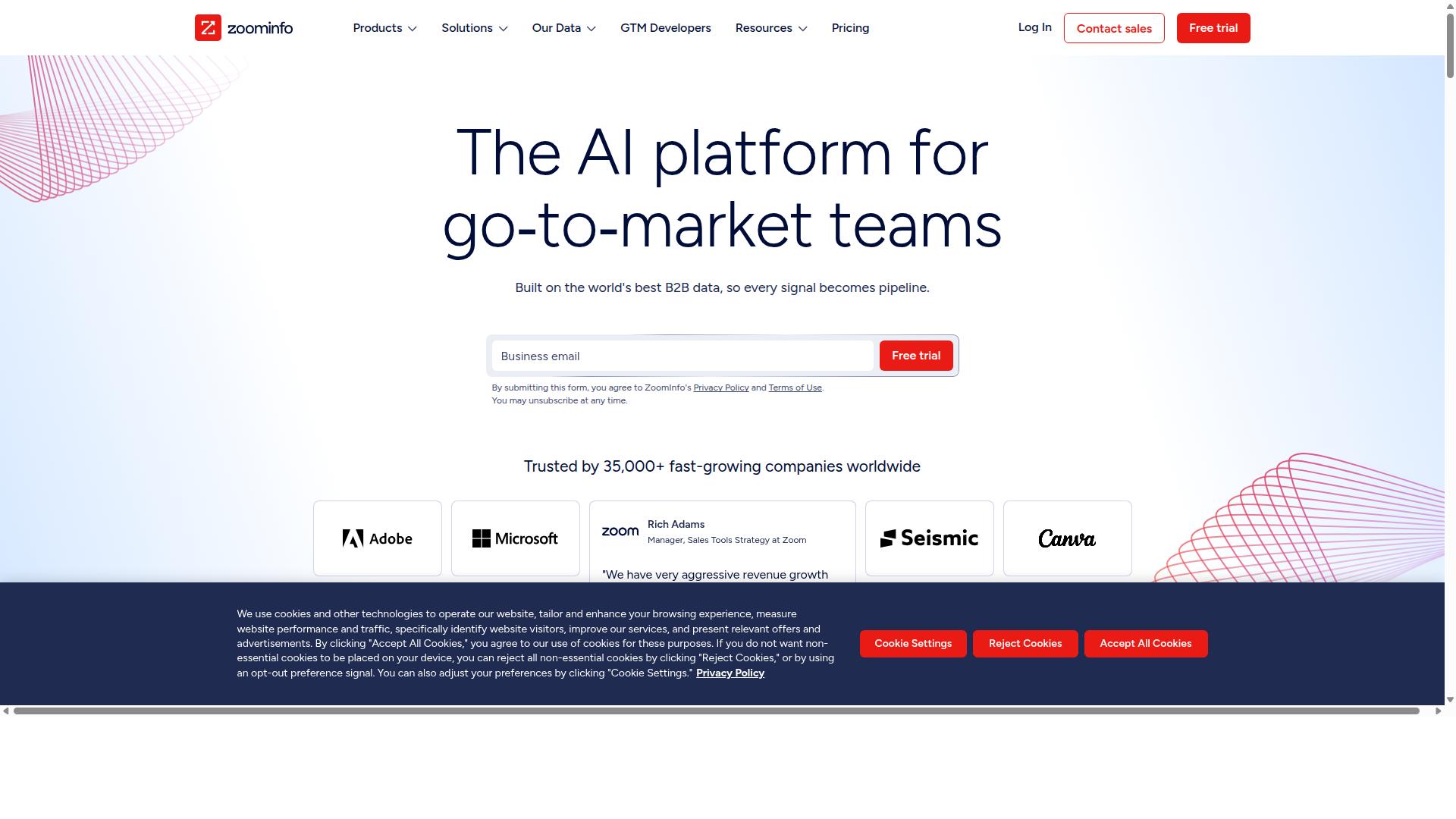
ZoomInfo is widely adopted by large sales organizations that need integrated workflows. The platform combines account and contact data into one system that supports both prospecting and account based marketing. Sales teams use it to find decision makers and track buying signals across global markets.
Enterprise customers value the unified view of firmographics, technographics, and intent signals. The system processes company hierarchy and revenue intelligence to support complex deal cycles. Organizations often choose this tool when they want one source for both CRM enrichment and sales enablement activities.
Enterprise Features
Large teams often prioritize seamless Salesforce and HubSpot synchronization plus intent data layering. Configurable user roles let managers control access across departments and regions. Territory planning dashboards help teams divide accounts and track coverage across multiple markets.
Bulk export limits can be adjusted based on team size and usage patterns. Pre built connectors reduce manual work when moving data between systems. Many enterprises add conversation intelligence and predictive modeling to improve their overall sales process.
These features suit organizations that need both data depth and workflow automation. Sales leaders can layer buying group insights on top of contact records. The combination helps teams move from lead generation to closed deals with fewer manual steps.
3. Cognism
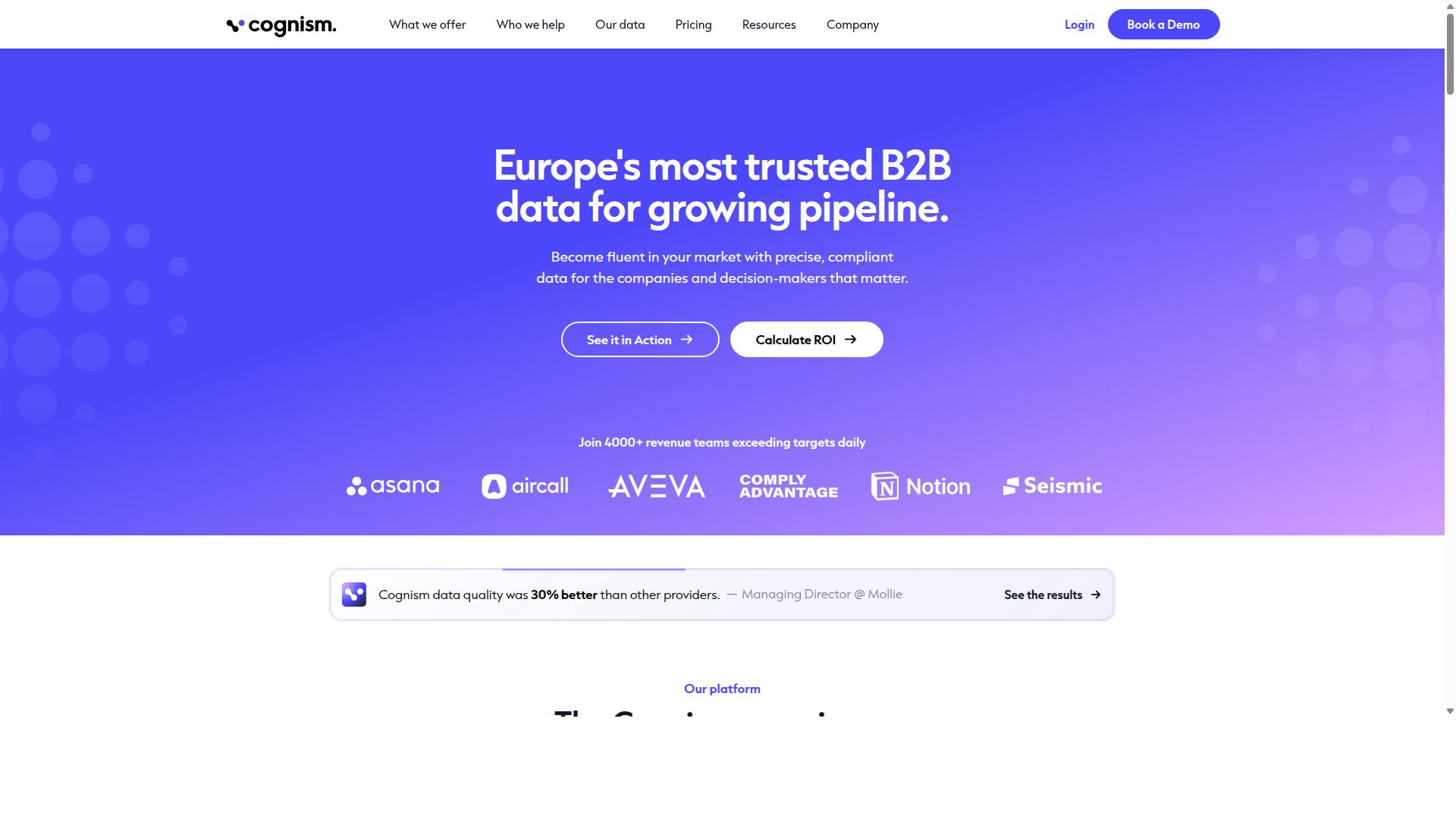
Cognism markets itself on privacy-first data sourcing and compliance tooling.
The platform focuses on B2B sales intelligence for revenue teams that need account data and contact data across global markets. It supplies prospecting resources, CRM enrichment, and real-time data delivery through API or batch methods.
Key elements include phone-verified mobile numbers, intent signals, hiring and funding alerts, and decision-maker data refreshed every 30 days. The service suits sales, marketing, and RevOps teams at enterprise, mid-market, and SMB companies, especially those targeting European markets.
GDPR and CCPA handling practices typically include double-opt-in sourcing, suppression lists, and consent logs. These steps help maintain data privacy standards while supporting lead enrichment workflows.
Compliance Focus
Compliance-centric buyers look for documented consent workflows and auditable data lineage.
Compliance teams typically audit three areas when reviewing sales intelligence vendors. They examine lawful basis documentation, data-processing agreements, and automated suppression synchronization across systems.
These checks help ensure contact data remains current and legally sourced. Regular reviews of consent records support ongoing data hygiene practices in B2B environments.
Buyers often verify that phone append and email verification processes align with regional privacy regulations. This approach reduces risk when scaling prospecting efforts across multiple territories.
4. Dun & Bradstreet
Dun & Bradstreet is frequently chosen for its decades-long archive of company records.
Longitudinal firmographic data helps teams track supplier stability across multiple years. This tracking supports risk analysis and supplier due diligence programs. Many organizations rely on historical trends to evaluate credit exposure and partner reliability.
Firmographic history also improves account planning by revealing ownership shifts and revenue patterns. Sales teams gain context for territory decisions and account-based marketing strategies. Global database coverage extends these benefits across international markets.
Historical Data Strength
Historical depth enables accurate year-over-year revenue modeling and credit-risk scoring.
Common historical fields include prior-year revenue figures, ownership changes, and corporate hierarchy snapshots. These data points create a baseline for identifying growth trends and structural shifts within target accounts. Analysts often review multiple years of records before approving new suppliers or large contracts.
Access to this historical detail also supports data hygiene efforts. Teams can compare current account data against past records to spot inconsistencies. Regular reviews help maintain accurate CRM records and reduce errors in lead enrichment workflows.
Many organizations incorporate these records into territory planning exercises. Historical patterns guide resource allocation and help prioritize high-potential segments. This approach strengthens sales enablement without relying on incomplete or fragmented datasets.
How to Choose the Right Option
Selection criteria should map directly to team size, compliance obligations, and volume requirements. B2B sales teams need scalable access to verified contact data while marketing teams focus on firmographics and buying signals.
Recruiting professionals prioritize decision maker identification and phone append accuracy. Research teams value data licensing terms and export flexibility across multiple formats.
| Selection Factor | B2B Sales Teams | Marketing Teams | Recruiting Teams | Research Teams |
|---|---|---|---|---|
| Database Reach | Global coverage for multi-region prospecting | Industry and technographic breadth | Executive contact completeness | Historical data access and licensing terms |
| Accuracy Guarantees | Email verification and phone append quality | Data freshness for campaign targeting | Decision maker validation | Compliance documentation availability |
| Export Formats | CRM integration options and bulk CSV | API access and segmentation exports | Individual profile downloads | Structured data formats for analysis |
| Per-Contact Cost | Volume-based pricing for high-volume outreach | Campaign budget alignment | Individual search flexibility | Enterprise licensing economics |
Teams should evaluate whether their primary need centers on lead enrichment or territory planning. Global database coverage becomes essential when expanding beyond domestic markets.
Compliance requirements vary by region and industry. GDPR compliance and CCPA compliance documentation should be reviewed before committing to any platform.
Bookyourdata serves businesses of all sizes including major enterprises such as IBM, Microsoft and Amazon. The platform supports 20,000+ paying customers across diverse industries with B2B data solutions designed for sales intelligence workflows.
Volume requirements determine whether subscription models or pay-per-use structures deliver better economics. Large teams processing thousands of contacts monthly benefit from predictable pricing tiers.
Final Verdict
Organizations that value verified contacts, flexible purchasing, and worldwide coverage often find a pay-as-you-go credit model advantageous.
The 97 percent accuracy guarantee stands out because it includes automatic credit refunds whenever results fall short of the standard. This level of assurance reduces risk for teams that need reliable account and contact data across multiple regions.
Real-time email verification happens at export, which means teams receive current addresses rather than cached records. The process supports lead enrichment efforts without requiring extra steps or third-party tools.
Credits that never expire remove pressure to use data quickly or lose remaining balance. This approach works well for companies that run seasonal campaigns, focus on territory planning, or expand outreach gradually.
Access to a 200-country reach enables consistent sourcing of firmographics, decision makers, and intent signals across every major market. Teams can maintain uniform data quality whether they target domestic accounts or international prospects.
The combination of refund-backed accuracy, perpetual credits, and broad geographic coverage positions this platform as a cost-efficient option for B2B data buyers who want scalable prospecting without rigid subscription terms or usage deadlines.
Recommended Resources: