
Your compliance team loses hours each week re-entering the same approvals across multiple systems. Many platforms make these hand-offs manual even after the workflow is live.
By the end of this article you will know which platform keeps policy updates and workflow steps in one place, how the automation features and pricing line up, and which option fits your team size and audit requirements.
Quick Verdict: Process Street vs Onspring for Customizable Workflows
Process Street delivers AI-powered workflow automation and compliance-ready proof, while Onspring offers general business process management for mid-market teams. Process Street's AI workflow orchestration with audit trails provides documented proof for regulated environments, whereas Onspring's configurable BPM focuses on broad process control without specialized compliance depth.
Process Street reports 30% faster documentation and 75% reduction in setup time. These improvements help teams move from initial planning to live processes more quickly while maintaining audit standards.
The core difference lies in how each platform handles compliance requirements. Process Street maintains SOC 2 Type II and ISO 27001 certifications with HIPAA compliance available. Onspring provides BPM configuration options but lacks equivalent documented compliance credentials for highly regulated industries.
Process Street serves 3,000+ companies and 1m+ users with 98% customer rating and five-minute average response time. This track record suggests reliability for teams needing both customization and proven support infrastructure.
Teams choosing between these platforms should evaluate their compliance needs first. Organizations requiring documented audit trails and regulatory proof will find Process Street's certified approach more suitable than general BPM configuration options.
At a glance: how Process Street compares to Onspring on the features that matter most.
| Feature | Process Street | Onspring |
|---|---|---|
| Customizable Workflows | ✓ | ✓ |
What Is Process Street?
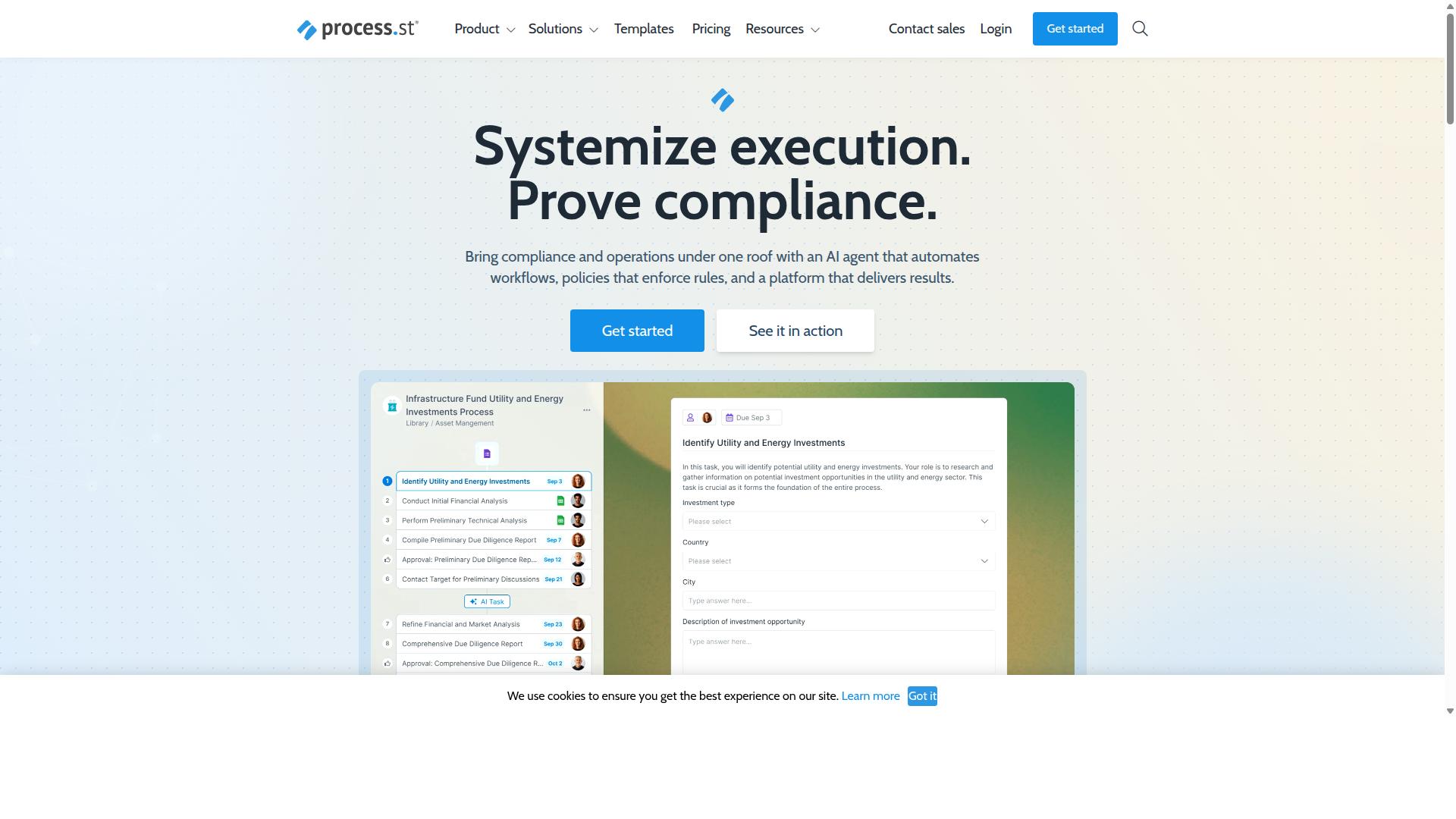
Process Street is a compliance operations platform that converts policy documents into AI-driven workflows with full governance. The platform automates business processes, enforces policies, and delivers audit-ready proof for regulated industries. Organizations use it to standardize operations while maintaining consistent compliance across multiple frameworks.
Process Street supports ISO 9001, SOC 2, SOX, and FDA requirements through built-in controls. The system records every action for audit trails. Teams gain visibility into process execution without manual tracking.
The platform includes Docs for document management and policy control. This module centralizes policies and maintains version history. Teams keep documentation current and accessible across departments.
Ops handles workflow automation and process orchestration. This module converts documented policies into executable workflows. Organizations maintain operational consistency through structured process execution.
Process Street offers Cora, an AI compliance and risk agent. This capability identifies potential compliance gaps before audits. Teams address issues proactively rather than reacting to findings.
What Is Onspring?
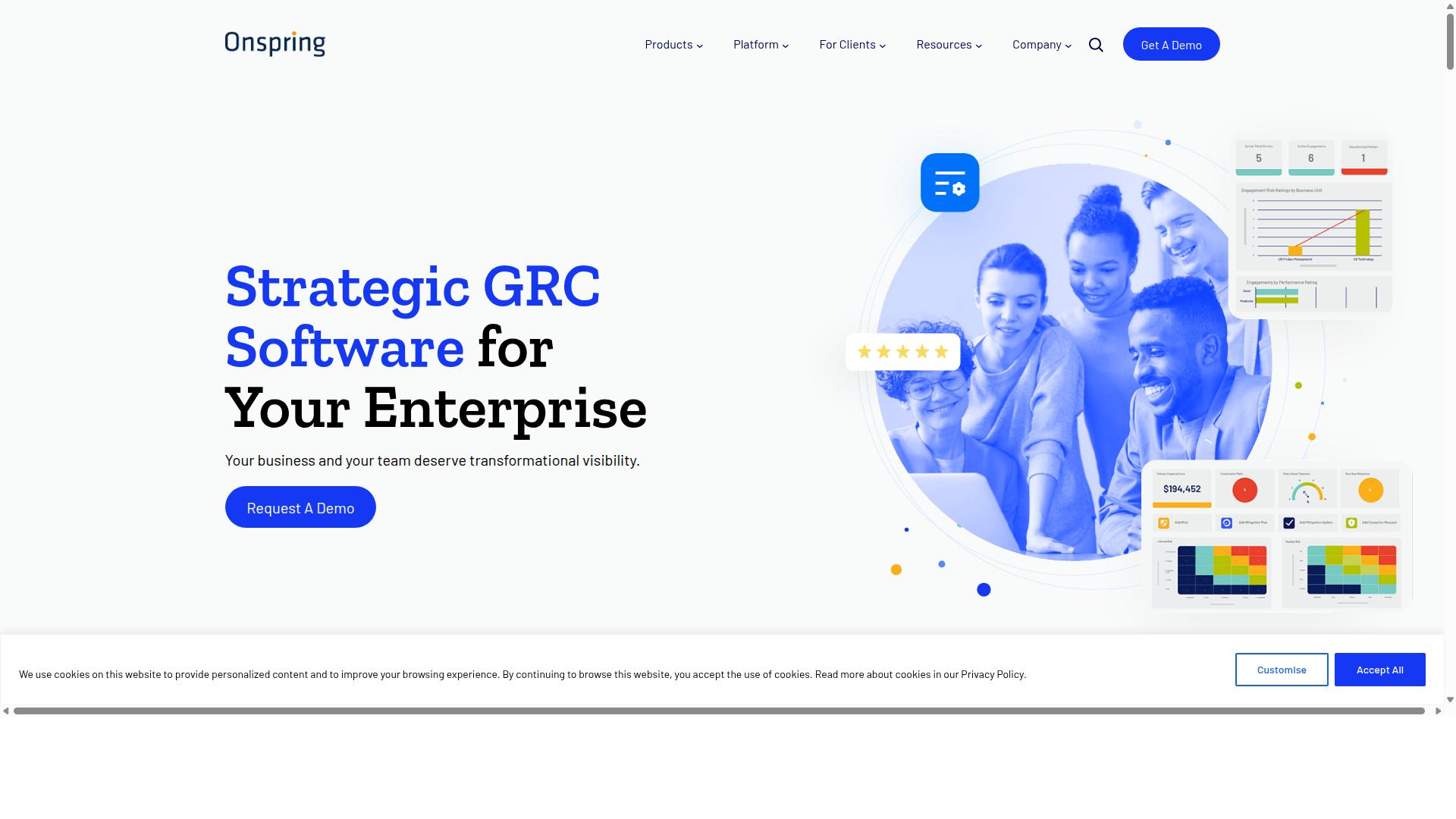
Onspring is a configurable BPM platform that lets organizations build custom workflows and data collection forms without writing code. This type of platform gives teams flexibility when they need to manage business processes across different departments.
Many companies turn to BPM tools when they want to standardize operations while still allowing room for customization. A no-code platform like Onspring removes the barrier of technical expertise for process builders.
Users can create forms to capture information and connect those forms to workflow automation sequences. The goal remains consistent across most BPM solutions: reduce manual work and improve consistency.
Process Street also offers a no-code platform for workflow automation. Where Onspring focuses on configurable data collection, Process Street emphasizes checklist automation and repeatable process execution.
When comparing these platforms for customizable workflows, the decision often depends on whether your team wants a broader data management approach or a focused process execution tool.
Features Compared
Feature-by-feature contrast shows differences in automation depth, policy linkage, and user permissions between the two platforms.
Both solutions offer workflow tools, but the approach to customizable workflows varies significantly. One platform emphasizes integration between policies and processes. The other focuses on general automation capabilities without policy enforcement.
Understanding these distinctions helps organizations select the right business process management solution for their needs. The comparison examines automation features and policy integration capabilities in detail.
Workflow Automation & Process Orchestration
Process Street automates workflows through AI-powered orchestration and conditional logic, whereas Onspring provides standard workflow automation functions.
The Ops module turns policies into AI-powered workflows with triggers, conditional rules, and approval sequences. This approach supports complex approval workflows that adapt based on conditions and user responses.
Organizations can create workflow templates that incorporate conditional logic for decision points. The system handles routing based on predefined criteria without manual intervention.
Onspring offers workflow automation without specific feature claims about AI orchestration or policy integration. The platform supports general task automation suitable for basic process needs.
Policy-to-Workflow Integration
Process Street links policy documents directly to live workflows, automatically enforcing governance and generating audit trails.
The Docs module maintains policy control with governance for ISO 9001, SOC 2, SOX, FDA, and more. Policy text maps directly to workflow steps for continuous compliance monitoring.
This integration ensures that compliance management happens automatically during process execution. Audit trails generate from workflow activities without additional configuration requirements.
Onspring does not provide this level of policy integration. Organizations seeking direct policy-to-workflow connections may find the platform's approach more limited for regulatory environments.
Pricing Compared
Process Street offers three tiers, Startup, Pro, Enterprise, while Onspring pricing is not publicly detailed in this comparison.
The Startup plan works well for smaller teams getting started with workflow automation. It provides unlimited workflows and tasks, up to 5,000 Data Set records, and 5 users with 10 guests allowed.
Startup also includes 10 automation apps and 100 automation actions per month, along with Public API access limited to 50 calls monthly.
The Pro plan removes most restrictions found in Startup. Teams gain unlimited everything plus custom users and guests.
Pro supports all automation apps and offers custom automation actions per month along with custom API calls per month.
Enterprise unlocks advanced security features and adds dedicated Success Manager support with priority care. This tier provides custom Data Set records and unlimited Public API access.
Enterprise customers also receive fully-managed workflows, custom integrations, bulk document import, and process consulting along with personalized team training.
Since Onspring pricing details remain unavailable publicly, interested buyers should contact the vendor directly to obtain current rates and plan options.
Who Should Choose Process Street
Process Street suits operations, compliance, HR, finance, and IT teams that need documented, audit-ready processes.
Financial services organizations rely on strict compliance requirements. Healthcare providers face regulatory scrutiny around patient data protection. Manufacturing firms need quality tracking systems that meet industry standards.
Professional services companies handle client workflows that demand accountability at every step. These industries share common needs around documented procedures and audit trails.
Over 3,000 companies and more than 1 million users already standardized on this platform. They chose Process Street for its no-code platform that supports complex approval workflows across multiple departments.
Teams in operations can build customizable workflows without technical expertise. Customer management departments use these processes to maintain consistency in client interactions. Compliance teams track audit trails through automated documentation features.
Human resources departments standardize employee onboarding procedures. Finance teams create approval workflows for expense management. IT and security groups maintain documented security protocols through role-based access controls.
The platform serves real estate, capital markets, and property management sectors. Technology companies use these tools for internal process management across distributed teams.
Process Street supports ISO compliance initiatives through structured documentation. Quality tracking becomes manageable through standardized checklists and procedures. Document control systems help organizations maintain version history and approval records.
Companies that need strong compliance management find the platform addresses their regulatory requirements effectively. The business process management capabilities scale as organizations grow their process documentation needs.
Who Should Choose Onspring
Onspring may appeal to mid-market teams that need a flexible BPM tool without heavy compliance constraints. Organizations that want to adjust workflows and dashboards often consider this option. The platform provides room for configuration while staying focused on core process needs.
Teams working in industries with lighter oversight requirements may find the setup process straightforward. Configurable workflows allow users to adapt processes as requirements change over time. This flexibility can help departments that manage shifting priorities and different types of requests.
Some organizations prefer tools that give them control over basic automation without complex setup steps. Reporting dashboards provide visibility into process status and outcomes. Users can adjust views based on what information matters most for their daily operations.
Companies that need moderate customization often start with simpler configurations and expand later. The system supports adjustments to data fields and form layouts as teams learn what works. This approach suits groups that want to grow their processes gradually rather than committing to complex structures from the start.
Departments handling internal requests or routine approvals may benefit from this type of platform. The focus stays on practical adjustments that match specific team requirements. Organizations can explore different layout options until they find arrangements that support their daily work patterns.
Final Verdict
Process Street stands out for teams that need AI workflow automation tightly coupled with policy governance and audit trails.
Organizations that value security certifications and proven implementation speed find a strong fit here. SOC 2 Type II and ISO 27001 certifications provide documented controls that meet enterprise compliance requirements across many industries.
Teams also benefit from reported outcomes such as 30% faster documentation and a documented 75% reduction in setup time from IMCD UK. These metrics suggest practical gains in both initial deployment and ongoing process maintenance.
The platform serves over 3,000 companies and more than one million users. This customer base spans sectors that require both customizable workflow features and reliable audit capabilities.
Onspring may suit organizations that need additional flexibility in specialized reporting or niche integration scenarios not covered by standard enterprise tools. However, teams focused on compliance, governance, and rapid rollout tend to favor Process Street's documented strengths.
Prospective buyers should contact sales to explore how specific workflow requirements align with available features. A tailored demo can clarify whether the platform meets unique business process needs before commitment.
Recommended Resources: