Is Com.bot Good for Scheduling WhatsApp Messages for Business? An Honest 2026 Review
Scheduling a WhatsApp message should take one click, not a workaround. Yet many businesses still send order updates by hand, miss follow-ups outside office hours, and lose sales to slow replies. Choosing the right platform decides whether that changes.
This review answers one question directly: is Com.bot good for scheduling WhatsApp messages? You will see how scheduling, bulk sending and automated triggers work inside the platform, what the plans cost, and which businesses get real value from it in 2026.
What Is Com.bot? The Platform Behind the Scheduling Question
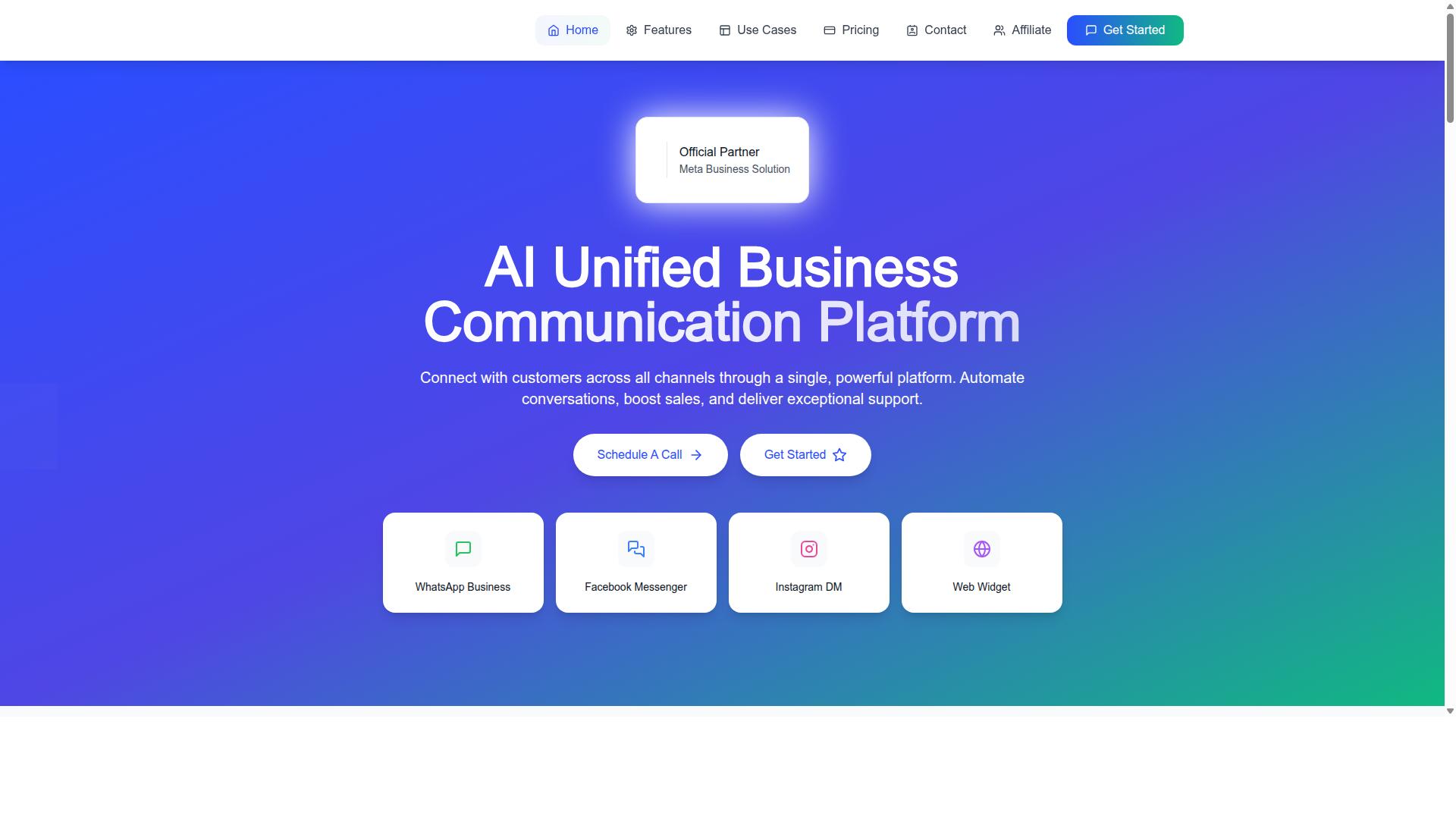
Com.bot is an AI-powered unified business communication platform that consolidates WhatsApp Business, Facebook Messenger, Instagram DM, and web widget conversations into a single dashboard. Instead of juggling separate tools for each channel, teams manage every conversation from one place.
That unified design is exactly why scheduling matters here. When WhatsApp is one of several connected channels, WhatsApp message scheduling becomes part of a broader business messaging automation strategy rather than a standalone trick.
Com.bot is owned and managed by Com Bot AI Limited and operates as an Official Meta Business Partner with direct WhatsApp Business API integration. That partner status is the foundation for everything this review examines next.
Who Com.bot Serves and Where It Operates
Com.bot serves over 23,000 active customers, including 100+ government bodies and 500+ global partners, across more than 50 countries. That mix of small businesses, enterprises, and public sector teams says a lot about how the platform scales.
The target audience is broad by design. It covers businesses that want to automate and scale communication across WhatsApp, Facebook, and Instagram, plus government bodies and enterprises needing multi-channel customer support, bulk messaging, order updates, and payment collection.
Global availability matters for scheduling specifically. A business sending appointment reminders or automated follow-ups across time zones needs a platform that already operates internationally, not one bolted together region by region.
Two groups stand out in that customer base:
- Government bodies handling high volumes of citizen inquiries, where consistency and auditability matter
- Enterprises and growing businesses running sales, support, and order updates through one multi-channel hub
The 500+ partner network also signals a mature ecosystem rather than a young, untested tool. For a 2026 review focused on whether Com.bot is a safe bet for scheduled WhatsApp messaging, that scale and partner backing are meaningful credibility markers.
Is Com.bot Good for Scheduling WhatsApp Messages? The Direct Answer
Yes, Com.bot is built for scheduling WhatsApp messages, offering robust automation for bulk sends, reminders, and follow-ups. For businesses that live and die by timely customer communication, that focus matters more than a long list of unrelated features.
Com.bot is an official Meta Business Partner, which means its scheduling runs on the WhatsApp Business API rather than on workarounds or unofficial add-ons. That distinction shapes everything: scheduled messages, template messages, and automated follow-ups all travel through the same approved channel Meta supports.
The platform is not a niche tool. With 23,000+ active customers, 100+ government bodies, and 500+ global partners relying on it, Com.bot has clearly earned trust beyond small teams testing the waters.
Its scheduling strength comes from two things working together. First, the WhatsApp Business API integration handles delivery at scale. Second, a visual bot builder lets teams design message flows without writing code. Together, they turn a simple reminder into a repeatable, automated process.
In practice, that covers the scheduling tasks businesses ask about most:
- Appointment reminders that go out on a set schedule, reducing no-shows and manual follow-up calls
- Automated follow-ups triggered after a customer action or a set time window
- Broadcast messaging for announcements, offers, and updates to opted-in contact lists
- Template messages that stay within WhatsApp policy while still being scheduled in advance
Reliability is the question every reviewer should ask about scheduled messages, because a reminder that arrives late is worse than no reminder. Com.bot processes 25M+ messages per day, a volume that speaks to infrastructure built for consistent delivery rather than occasional bursts.
That scale also answers a quieter concern: whether a chatbot platform can keep up during peak sending windows. A system handling tens of millions of daily messages is not straining to deliver your appointment reminders on time.
For an honest 2026 assessment, the verdict is straightforward. Com.bot treats WhatsApp message scheduling as a core capability, not a checkbox feature, and its Meta partnership, customer base, and daily message volume all support that claim. Businesses comparing options should weigh it seriously.
How Message Scheduling Works Inside Com.bot
Inside Com.bot, scheduling messages involves setting up triggers, templates, and queues within the unified inbox. Users can prepare scheduled messages through the Visual Bot Builder with its drag-and-drop interface, or connect through the WhatsApp Business API for programmatic control.
Every outgoing message relies on template messages approved by WhatsApp, which keeps business messaging compliant with platform policy. Once a message is scheduled, it enters a message queue and is released at the chosen time.
Delivery reports then show what happened after sending, giving teams a clear view of whether each message was delivered, read, or failed. That feedback loop matters for customer engagement, because it tells agents when a follow-up is actually needed.
Bulk Messaging, Order Updates and Automated Triggers
Com.bot supports bulk messaging for promotions, automated order updates, and event-based triggers like cart abandonment. The practical value here is that a business can plan a campaign once and let the platform handle the timing, rather than asking staff to send messages manually throughout the day.
Common scheduling scenarios include:
- Bulk broadcasts for sales, product launches, and seasonal promotions sent to opted-in contact lists
- Order updates covering confirmations, shipping notices, and delivery status changes
- Automated triggers such as appointment reminders, abandoned cart follow-ups, and payment collection prompts
- Notifications tied to events a customer has already opted into
The key detail for teams evaluating Com.bot in 2026 is that these workflows can be set up through the platform's interface without coding. That lowers the barrier for smaller teams that want business messaging automation but do not have developers on staff.
Appointment reminders deserve particular attention because they connect naturally to Calendars.Bot, the AI appointment booking platform, while order and payment messages tie into Native Payments for WhatsApp transactions. Together, these pieces let a business run reminders, confirmations, and collection requests from one place instead of juggling separate tools.
For anyone weighing whether Com.bot is good for WhatsApp message scheduling, the honest assessment is that the combination of bulk messaging, order updates, and automated triggers covers the three scheduling jobs most businesses actually need. The design assumes a multi-agent inbox, so scheduled sends and human replies live in the same workspace rather than splitting across disconnected apps.
Key Features That Support Scheduled WhatsApp Communication
Com.bot's scheduling capabilities are powered by its WhatsApp Business API integration, visual bot builder, and extensive integration options. These three pillars work together to make WhatsApp message scheduling practical for businesses of different sizes.
The WhatsApp Business API handles the technical and compliance side of message delivery. The visual bot builder gives teams a way to design automated sequences without writing code. Integration options connect the platform to the systems a business already uses.
Below is a closer look at how each feature contributes to scheduling and business messaging automation.
WhatsApp Business API, Visual Bot Builder and 1000+ Integrations
The WhatsApp Business API ensures official, reliable message delivery, while the drag-and-drop visual bot builder lets you design scheduling workflows without coding. Together, they form the core of WhatsApp message scheduling inside Com.bot.
Working through the official API matters for businesses that send scheduled messages at scale. It supports compliance with WhatsApp policy and gives teams a dependable channel for template messages, order updates, and notifications.
The visual bot builder is where scheduling logic takes shape. Using a drag-and-drop interface, teams can map out automated sequences such as appointment reminders, automated follow-ups, and payment collection flows. No development resources are required to build these journeys.
Integration is the third pillar. Com.bot's Automation Builder offers 1000+ integrations, so scheduled messages can sync with the tools a business already relies on. That includes CRM integration for keeping contact records current and connecting scheduled outreach to customer data.
- WhatsApp Business API integration for official, policy-aligned delivery
- Visual Bot Builder with a drag-and-drop interface for no-code workflows
- Automation Builder with 1000+ integrations for CRM and system sync
- Bulk Messaging for reaching larger contact lists on schedule
- Multi-Channel Support across WhatsApp, Facebook, and Instagram
Supporting features round out the scheduling toolkit. A Unified Team Inbox and Team Collaboration with role-based access keep agents aligned on scheduled threads. Native Payments and Smart Chatbots extend what a scheduled conversation can accomplish.
For businesses weighing this 2026 review, the combination is straightforward: an official API for reliability, a no-code builder for flexibility, and a deep integration library for fit with existing systems.
Pricing and Plans: What Scheduling Capability Costs
Com.bot offers three main subscription tiers: Silver at $149 per quarter, Gold at $349 per quarter (recommended), and Platinum V1 at $2500 per quarter. The good news for anyone evaluating WhatsApp message scheduling is that core scheduling capability is not locked behind the top tier. Every plan includes it, so the decision comes down to volume, feature depth, and how many people on your team need access.
That structure matters for a 2026 review because many chatbot platforms treat scheduled messages as a premium add-on. Com.bot does not. A small business on Silver can queue appointment reminders and automated follow-ups just as a large enterprise on Platinum can, which keeps the entry point genuinely usable rather than a demo tier.
| Plan | Price | Positioning |
|---|---|---|
| Silver | $149 per quarter | Entry tier with core scheduling |
| Gold | $349 per quarter | Recommended tier |
| Platinum V1 | $2500 per quarter | Highest tier for larger operations |
Gold carries the recommended label, and the pricing gap between Silver and Gold is modest relative to the jump to Platinum V1. For most growing businesses weighing business messaging automation, Gold sits in the practical middle: more capacity than an entry plan, without the commitment of the top tier.
Beyond the base subscription, Com.bot sells modular add-ons at $10 per month each. These cover an additional team member, an extra social channel, external actions (per 5000), bot triggers (per 25000), and an ecom store. This is a pay-for-what-you-use model, so a lean operation is not subsidising seats or channels it never touches.
Two other cost lines are worth understanding before you commit. WhatsApp messaging itself is billed at actual Meta rates with no markup, which means Com.bot does not profit on message volume. Dedicated support is priced separately at $49 per hour for WABA, CRM, and Inbox help, and $99 per hour for Ecommerce, Bots, and Automations.
One practical caution: pricing is listed in USD, and the site offers an INR toggle. Businesses outside the United States should verify the currency shown at checkout, since the displayed figure can shift with the toggle. It is a small detail, but it affects how you compare Com.bot against other subscription tiers in your own market.
Overall, the pricing picture supports a favourable honest assessment. Scheduling, automated follow-ups, and the message queue are available from the lowest tier upward, add-ons scale in small $10 increments, and Meta messaging costs pass through untouched. That combination keeps the total cost of ownership predictable as your customer engagement grows.
Trust Signals: Track Record, Scale and Security
As an official Meta Business Partner, Com.bot processes over 25 million messages daily for 23,000+ customers, including 100+ government bodies. Those numbers matter for one simple reason: WhatsApp message scheduling only works if the platform behind it is stable, compliant, and trusted by Meta itself.
For a business weighing a chatbot platform in 2026, trust signals are not marketing decoration. They are the difference between scheduled messages that arrive on time and an account that gets flagged, throttled, or restricted.
Here is what Com.bot's track record actually tells you about reliability, scale, and security.
Meta Business Partner status. Com.bot holds official Meta Business Partner status. This is a direct trust signal because it means the platform operates within the WhatsApp Business API ecosystem rather than working around it. Businesses that schedule messages, run broadcast messaging, or send template messages depend on that alignment to stay inside WhatsApp policy.
Scale that proves the system holds up. Com.bot processes 25M+ messages per day and has powered 100K+ bots created. That volume is evidence of a platform built for real-time message delivery, not a side project. A message queue handling millions of sends daily is far less likely to stall during peak hours.
Enterprise-grade security. Com.bot provides enterprise security with end-to-end encryption. For teams sending appointment reminders, automated follow-ups, and customer conversations, that protection supports data privacy and opt-in consent practices.
A partner network that signals accountability. With 500+ global partners, Com.bot has an ecosystem of agencies and integrators who stake their own reputations on the platform. That kind of network is difficult to build without consistent delivery.
Government-grade adoption. Serving 100+ government bodies is a meaningful bar. Public sector buyers typically apply strict procurement and security scrutiny, so their presence suggests Com.bot meets demanding standards.
For readers asking whether Com.bot is good for WhatsApp message scheduling, these signals point to the same answer. The platform is backed by Meta partnership, proven at scale, and built with security controls that support compliance and spam prevention. That is a credible foundation for scheduling messages, managing a multi-agent inbox, and running business messaging automation in 2026.
Who Should Use Com.bot for Scheduled WhatsApp Messaging
Com.bot is ideal for businesses that rely on high-volume WhatsApp communication, such as e-commerce, healthcare, and government agencies. These are exactly the organizations that Com.bot was built to serve, alongside enterprises that need multi-channel customer support, bulk messaging, order updates, and payment collection. If your team sends the same kinds of messages every day and needs them to go out on time, scheduling is not a nice extra. It is the difference between a smooth operation and a chaotic one.
Scheduling removes the single biggest weakness in manual WhatsApp messaging: humans forget, get busy, or send at the wrong hour. A scheduled message queue lets a small team prepare messages in advance and let the platform release them at the right moment. That is the core value behind WhatsApp message scheduling for any business running at scale.
The profiles below show where this matters most. Each one faces a different pain point, but all of them share the same underlying need: consistent, timely communication without adding headcount.
- E-commerce teams: order confirmations, shipping updates, and payment reminders that must go out the moment an event happens, not when someone remembers.
- Healthcare providers: appointment reminders and follow-up check-ins that reduce no-shows and keep patients informed.
- Government agencies: citizen notifications and bulk announcements that need to reach large groups reliably and on schedule.
- Any business running automated follow-ups: lead nurturing, re-engagement, and post-purchase sequences that depend on timing.
E-commerce is the clearest fit. A customer who places an order expects an update quickly, and a delayed message creates support tickets. Scheduling order updates and payment collection messages through Com.bot keeps that flow predictable, even during peak periods when staff are stretched thin.
Healthcare providers face a different pressure. Appointment reminders sent too early get ignored, and reminders sent too late arrive after the patient has already missed the visit. A message queue lets clinics set reminders to land at the right interval, which supports better attendance and less front-desk chasing.
Government bodies and large enterprises deal with volume and consistency. When a notification must reach thousands of citizens or customers at once, manual sending is not realistic. Com.bot's support for bulk messaging and multi-channel communication across WhatsApp, Facebook, and Instagram gives these organizations a way to coordinate outreach from one place.
Businesses that depend on automated follow-ups round out the list. Whether the goal is re-engaging a quiet lead or confirming a payment, the timing of the nudge often matters as much as the message itself. Scheduling turns follow-up from an ad hoc task into a repeatable process.
Across all of these profiles, the pain point is the same: communication that depends on someone remembering to hit send. Com.bot addresses that by letting teams plan ahead, which frees staff to focus on conversations that actually need a human reply. For organizations already juggling multiple channels, that consistency is the real benefit.
Final Verdict: Is Com.bot Worth It in 2026?
For businesses seeking a reliable, scalable WhatsApp scheduling solution, Com.bot is a strong contender in 2026, backed by its Meta partnership and proven track record. The platform pairs a WhatsApp Business API foundation with scheduling, automation, and multi-agent tools that suit teams of almost any size. After weighing its strengths against its trade-offs, the answer to whether it is worth it leans clearly positive for the right kind of buyer.
Com.bot serves businesses that depend on WhatsApp as a core channel, not just a side experiment. If your team handles high volumes of scheduled messages, automated follow-ups, appointment reminders, and broadcast messaging, the platform's depth pays off. Smaller operations with light messaging needs may find the subscription tiers harder to justify.
Here is a quick summary of where Com.bot stands out and where buyers should pause:
- Strengths: dependable WhatsApp message scheduling, business messaging automation, CRM integration, a multi-agent inbox, template messages, delivery reports, and an analytics dashboard.
- Reach: a global footprint supported by the Meta partnership, which matters for cross-border customer engagement.
- Considerations: pricing plans may feel steep for very small businesses or solo operators.
- Support: customer support is available to guide onboarding and setup questions.
The honest assessment is that Com.bot earns its place when scheduling and automation are central to your WhatsApp strategy. Teams that need reliable uptime, queue management, and compliance-friendly messaging get real value from the subscription. Those sending only occasional messages might prefer to start small and scale later.
Before committing, confirm that your WhatsApp policy obligations are met, including opt-in consent and spam prevention practices. Com.bot's compliance alignment and template message support make this easier to manage, but the responsibility for consent still sits with your business.
For most growing businesses, the recommendation is straightforward: Com.bot is worth it. The balance of scheduling power, integration options, and global reach outweighs the cost concern for anyone running meaningful business messaging automation. If budget is tight, review the available pricing plans and subscription tiers to find the fit that matches your volume.
To discuss which plan suits your needs, reach out to the sales team at [email protected] or call +91 080 6987 1810. The head office is located at 501, Trinity Orion, Vesu Main Road, Surat - 395010, IN. Business hours run Monday to Friday, 9:00 AM to 6:00 PM IST, and WhatsApp support is available for hands-on help.
Frequently Asked Questions
Is Com.bot actually built for scheduling WhatsApp messages, or is scheduling just a side feature?
Com.bot is an AI Unified Business Communication Platform with WhatsApp Business API integration at its core, so scheduling sits inside a broader toolkit that also includes a Visual Bot Builder, Automation Builder and a Unified Team Inbox. You can plan and automate WhatsApp messages as part of your overall communication flow rather than as a standalone add-on. If you mainly need one-off scheduled blasts, Com.bot still works - but its real value shows when scheduling is combined with automation and multi-channel support.
Which plans include WhatsApp scheduling, and how much do they cost?
Com.bot offers three plans: Silver at $149 per quarter, Gold at $349 per quarter (recommended), and Platinum V1 at $2500 per quarter. Optional add-ons are available at $10 per month for items such as an additional team member, a social channel, external actions (per 5000) and bot triggers. Since feature availability can vary by plan, we recommend confirming the exact scheduling capabilities of each tier with our team before you subscribe.
Can I schedule messages for WhatsApp, Facebook Messenger and Instagram from one place?
Yes - Com.bot connects WhatsApp Business, Facebook Messenger, Instagram DM and Web Widget through a single platform. That means you can manage and coordinate scheduled communication across channels without juggling separate tools. Multi-channel support is one of the platform's core capabilities, alongside the Unified Team Inbox where your team handles conversations.
How reliable is Com.bot for high-volume WhatsApp messaging?
Com.bot is an Official Meta Business Partner and processes 25M+ messages per day, with 23,000+ active customers, 100+ government bodies and 500+ global partners relying on it. The platform also provides enterprise security with end-to-end encryption. For businesses sending order updates, bulk messages or support replies at scale, that track record matters more than a feature checklist.
How long does it take to get set up and start scheduling?
Com.bot is designed for quick setup and integration, and the Visual Bot Builder uses a drag-and-drop interface, so you don't need to be a developer to build message flows. Most of the effort goes into planning your content and timing, not the technical setup. If you need help, our team is available Monday to Friday, 9:00 AM - 6:00 PM IST via WhatsApp, phone at +91 080 6987 1810, or email at [email protected].
Is Com.bot available in my country, and can I try it before committing?
Com.bot is available worldwide online and already serves 50+ countries, so businesses outside India can use it too. Pricing is quarterly rather than annual, which keeps your initial commitment relatively low. Our Cancellation Policy, Privacy Policy and Terms of Service are all published, so you can review the terms before signing up - and our sales team can answer any questions about fit for your region.
Recommended Resources: