Top 5 Performance Management Tools for Goal Tracking
Your quarterly reviews are stalling because goals live in spreadsheets, emails, and chat threads instead of one system. That fragmentation hides progress until it is too late to course-correct. By the end of this article, you will have five concrete tools to evaluate, a clear number one pick for integrated goal tracking, and a practical framework for matching platform features to your team's size and maturity.
We compared each option on goal alignment, check-in frequency, and review cycle flexibility, then ranked them by real-world usability. You will leave knowing exactly which tool fits your workflow and which ones will just add another dashboard to ignore.
What to Look For in Performance Management Tools for Goal Tracking
When evaluating performance management tools for goal tracking, prioritize features that align individual efforts with organizational objectives, such as OKR support, real-time progress dashboards, and seamless integration with continuous feedback loops. The right tool should make goal setting feel natural, not like another administrative burden. Focus on capabilities that drive accountability while reducing manual work for managers and employees alike.
Start with goal alignment capabilities. A strong platform should support OKRs, KPIs, SMART goals, and simple individual targets. Ask whether it allows cascading goals from company level down to team and individual levels. This visibility helps everyone understand how their daily work connects to broader business outcomes.
Look for real-time progress tracking with visual dashboards. Charts, progress bars, and color-coded status indicators make it easy to spot stalled objectives at a glance. Data visualization tools should let you filter by department, time period, or goal owner without digging through spreadsheets.
Integration with continuous feedback and check-ins matters more than most buyers realize. Goal tracking should not exist in isolation from performance reviews or 360-degree feedback. A tool that connects progress updates with regular check-ins encourages ongoing conversations about obstacles and wins.
Consider automation of reminders and reporting. The best tools nudge employees when deadlines approach and automatically generate status reports for leadership. Automated reminders reduce the need for managers to chase updates manually, which keeps goal tracking consistent across the organization.
Ease of use and adoption often determines whether a tool succeeds or fails. If employees find the interface confusing, they will abandon it within weeks. Look for intuitive navigation, minimal training requirements, and a clean mobile experience for on-the-go updates.
Finally, evaluate scalability for team size and pricing transparency. Your needs at 20 employees will differ from your needs at 200 or 2,000. Confirm that the platform can handle growing user counts and more complex org structures. Transparent pricing helps you predict costs as you expand, avoiding surprise fees later.
When comparing options, create a short checklist of your must-have criteria before demoing any software. Test whether each tool handles cascading objectives, milestone tracking, and performance metrics in a way that fits your workflow. The goal is to find software that supports goal alignment, accountability, and employee engagement without adding complexity to your existing processes.
1. HeyRamp - Best Overall
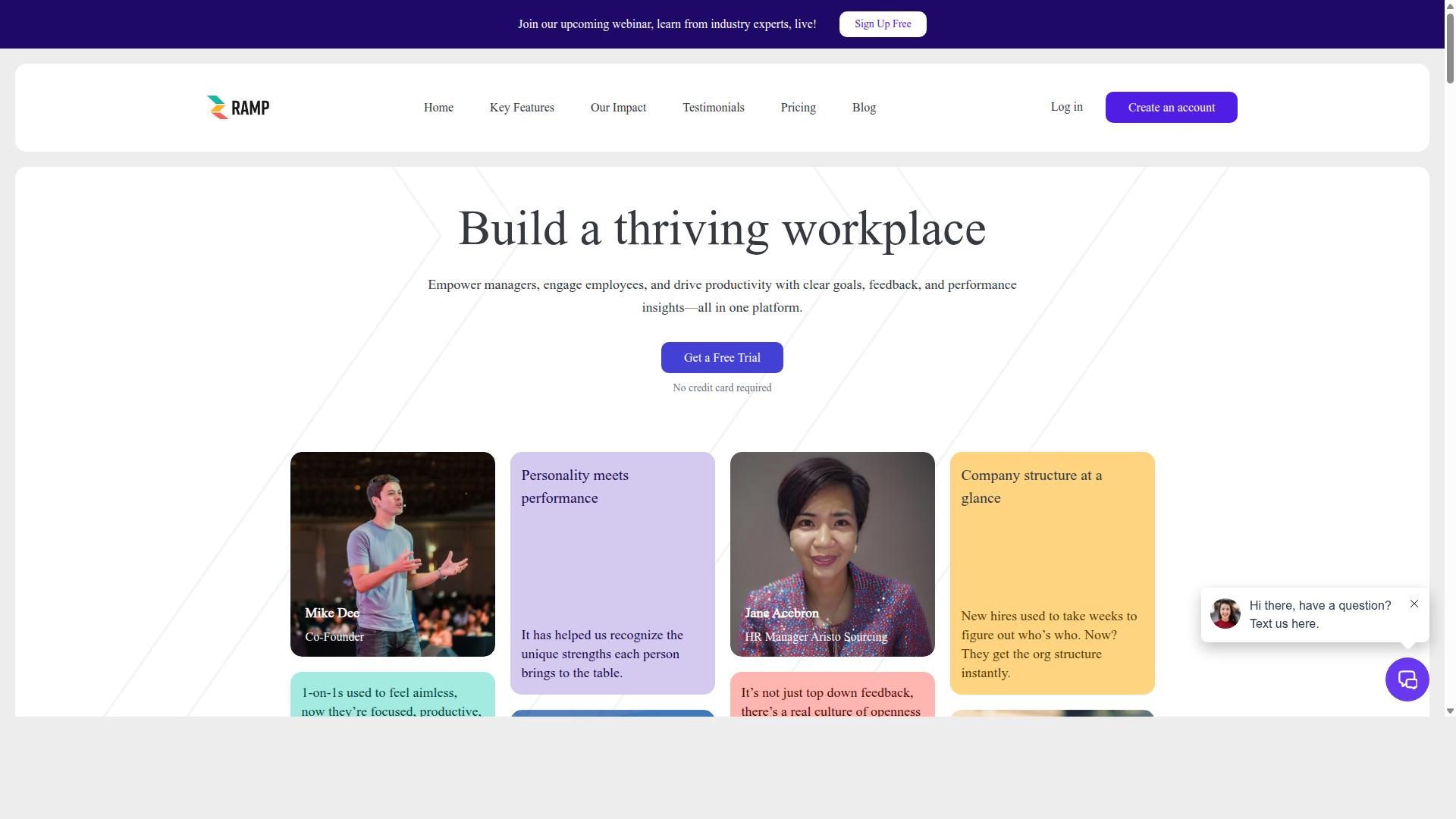
HeyRamp stands out as the best overall performance management tool for goal tracking, combining robust OKR and goal management with real-time progress visibility and a flat, affordable pricing model. It is an all-in-one platform for feedback, reviews, and team development, designed to serve leadership, HR professionals, and managers alike.
The platform is available globally, making it a practical choice for distributed and international teams. Rather than juggling separate tools for goal setting, check-ins, and reviews, teams get one connected system that supports the entire performance cycle.
Integrated OKR and Goal Management with Real-Time Progress
HeyRamp's integrated OKR and goal management lets you set, track, and align objectives and key results across the entire organization, with real-time progress visualization. The platform supports individual goals, team goals, and company goals, so every level of the organization stays connected to the same priorities.
Real-time progress tracking keeps performance metrics visible without waiting for quarterly reviews. A manager can view team OKRs, drill into individual key results, and see progress updates in real time. This visibility supports better alignment and accountability across the organization.
Several built-in features reinforce this goal-tracking workflow:
- Company structure visualization to see how goals connect across departments
- 1-on-1 meeting tools with organized agendas and action tracking
- Personality insights and testing to understand team dynamics
- KPI snapshots and people analytics dashboards for performance insights
These tools help managers turn goal tracking into an ongoing conversation rather than a once-a-year event. Guided conversation templates, coaching tips, and automated reminders keep teams engaged between formal check-ins.
Pricing and Value: Flat Fee from $3.00 per Seat Monthly
HeyRamp's transparent pricing, starting at $3.00 per seat per month billed annually, delivers enterprise-grade features without hidden costs, making it a high-value choice for teams of any size. The monthly option is $5.00 per seat, while enterprise plans use custom per-seat pricing.
The flat fee model is a key differentiator. Unlike competitors that charge extra for advanced modules, HeyRamp includes all features under one price. That means OKR tracking, performance reviews, 1-on-1 tools, personality testing, and people analytics are all part of the same plan.
The value extends beyond features. Built-in training videos cover 1-on-1s, performance reviews, and personality testing, helping managers use the platform effectively from day one. Compliance documentation with time-stamped secure records is also included, which matters for HR teams managing performance appraisals.
New teams can start with a 14-day trial with no credit card required, with full access from day one. Plans can be switched at any time, so there is little risk in exploring whether HeyRamp fits the team's goal tracking needs.
2. 15Five
15Five is a strong contender for organizations prioritizing continuous performance management, with a focus on employee engagement and frequent check-ins. The platform is designed to replace the traditional annual review cycle with an ongoing dialogue between managers and their teams.
The name itself reflects the core concept: employees spend about 15 minutes each week completing a check-in, and managers spend about five minutes reviewing and responding. This lightweight cadence keeps performance conversations regular without adding heavy administrative burden.
For mid-sized to enterprise teams, 15Five offers a structured way to capture employee sentiment and track progress. However, the platform's pricing can run higher than some alternatives, and the breadth of features may feel overwhelming for smaller teams or those new to continuous performance management.
Organizations with dedicated HR resources and a clear performance philosophy will get the most value from 15Five. Teams looking for a simpler, more direct goal-tracking experience may find the feature set more than they need.
Continuous Performance Management with Objectives Alignment
15Five's continuous performance management model encourages weekly check-ins and real-time feedback, ensuring that employee objectives stay aligned with company goals. The platform integrates individual goals with broader organizational priorities, making it easier to see how daily work connects to strategic outcomes.
Managers can use 15Five to prompt employees for weekly updates on progress, challenges, and wins. These check-ins create a natural rhythm for discussing goal tracking and removing obstacles before they become major issues.
The platform's "Best-Self" philosophy encourages employees to reflect on their strengths and what they need to perform at their best. This approach shifts the focus from purely evaluative feedback to developmental conversations that support employee engagement and growth.
Built-in engagement surveys give HR teams visibility into team morale and potential burnout risks. When combined with performance metrics and check-in data, these surveys offer a more complete picture of workforce health than reviews alone.
For example, a sales manager might use 15Five to set quarterly OKRs for each rep, then track weekly progress through automated check-in prompts. If a rep falls behind on a key result, the manager can offer support early rather than waiting for a formal performance appraisal to surface the issue.
This continuous feedback loop supports accountability and keeps employees focused on the right priorities. For teams that value regular coaching conversations over annual reviews, 15Five provides a solid framework for ongoing development.
3. PerformYard
PerformYard offers a flexible performance management solution, particularly known for its customizable review cycles and straightforward goal tracking. It positions itself as an AI-driven platform that unifies reviews, goals, meetings, and engagement for HR leaders. The tool is designed to handle everything from annual reviews and 360 feedback to competency-based assessments and performance improvement plans.
For organizations that want a lightweight yet adaptable system, PerformYard is a strong contender. It avoids the heavy administrative burden often associated with larger enterprise platforms. Instead, it focuses on making the core processes of performance review and goal tracking as simple and configurable as possible.
The platform also includes reporting and analytics, employee engagement tools, and integrations with popular HRIS systems, SSO providers, Slack, and Teams. This makes it a practical choice for companies that already rely on a specific HR software stack and need a performance layer that fits right in.
Flexible Goal Tracking with Custom Review Cycles
PerformYard's custom review cycles allow organizations to tailor performance evaluations to their unique cadence, while its goal tracking keeps employees focused on key priorities. Instead of forcing every team into the same template, administrators can build different review forms for different departments or roles. This flexibility extends to setting frequencies, so a sales team might run quarterly check-ins while the engineering team sticks to a semi-annual rhythm.
Automated reminders keep the process moving without managers having to chase down paperwork. The system tracks where each review stands, reducing the risk of missed deadlines and incomplete submissions. This structured approach supports performance appraisal workflows without adding unnecessary complexity.
Goal tracking in PerformYard is intentionally simple. Employees can set individual goals and link them directly to their reviews, creating a clear connection between daily work and formal evaluations. This alignment helps employees see how their contributions map to broader team and company objectives. It also gives managers a concrete basis for discussion during performance review cycles.
Here is a practical use case: a company can run quarterly performance reviews with a specific form and separate annual reviews with a different form. The quarterly form might focus on short-term milestones and KPIs, while the annual form covers competencies and long-term development. Both forms exist side by side, and each employee's goals flow through both cycles seamlessly.
One potential downside is that PerformYard places less emphasis on continuous feedback than some competitors. While it does offer feedback tools and 1:1 meeting features, its core strength remains the structured review cycle. Organizations that want constant, informal check-ins as their primary mechanism might find the tool slightly rigid. However, for teams that prefer a clean, configurable review system with solid goal tracking, PerformYard delivers well.
4. Peoplebox
Peoplebox takes an OKR-first approach, integrating automated check-ins and real-time analytics to keep goals on track. The platform is designed for teams that want to move beyond annual performance reviews and embrace continuous alignment.
The tool works well for tech-savvy teams and startups that already operate in fast-moving environments. It connects goal tracking directly to daily work, which helps reduce the disconnect between strategy and execution.
OKR-First Approach with Automated Check-ins
Peoplebox's OKR-first approach ensures that every goal is tied to measurable key results, with automated check-ins that prompt progress updates without manual follow-up. The system supports setting OKRs at the company level and then cascading them down to team and individual goals.
This goal alignment creates a clear line of sight from daily tasks to broader organizational objectives. Employees can see how their work contributes to company priorities, which supports employee engagement and accountability.
The automated check-in feature works through integrations with Slack and Teams. Instead of asking employees to log into a separate dashboard, the tool sends reminders directly into the communication channels teams already use.
For example, a product manager might receive a Slack prompt asking for a weekly update on their key results. They can reply with a quick status note, and the system logs that update automatically. This removes friction from progress tracking and makes continuous feedback part of the normal workflow.
Peoplebox also provides analytics and dashboards that give managers a real-time view of progress across the organization. These reporting tools help identify stalled objectives early, so leaders can intervene before minor delays become major setbacks.
For startups that already live in Slack or Teams, this approach reduces adoption barriers. The platform fits into existing habits rather than requiring a new daily routine, which can make the difference between consistent tracking and abandoned spreadsheets.
5. Workleap
Workleap simplifies goal setting and performance management for growing teams, offering an intuitive interface that encourages adoption. This platform is particularly well suited for small to mid-sized organizations that want a straightforward way to track objectives without overwhelming their people with complex processes.
The platform combines goal tracking with employee engagement tools, making it a practical choice for companies that value culture alongside performance. Teams can run performance reviews, schedule check-ins, and gather feedback all from one central hub. This keeps the focus on continuous improvement rather than administrative busywork.
For organizations that are new to formal performance management, Workleap offers a gentle entry point. The interface is clean and approachable, which means managers and employees are more likely to actually use it. However, teams that need deep customization or advanced analytics may find the feature set somewhat limited compared to enterprise-grade solutions.
Simplified Goal Setting for Growing Teams
Workleap's simplified goal setting allows growing teams to define and track objectives without a steep learning curve, fostering consistent progress. Users can create both individual goals and team goals, then monitor advancement through simple dashboards that display status at a glance. Automated reminders help keep everyone on schedule without constant managerial follow-up.
The platform supports employee engagement through regular check-ins, where managers and staff can discuss progress, address roadblocks, and adjust priorities as needed. This creates a rhythm of accountability that keeps objectives moving forward. Workleap also offers AI-suggested goal setting, which helps managers craft meaningful objectives that align with broader company priorities.
A practical use case: a startup can set quarterly goals and have employees update progress in minutes. Instead of wrestling with spreadsheets or complex project management software, team members simply log their status and add brief notes. This low-friction approach means goal tracking actually happens, rather than being postponed until the end of the quarter.
Workleap integrates with over 100 tools, including Slack, Jira, and Confluence, so feedback and progress data can flow naturally from daily work. For growing teams that want visibility and alignment without heavy process overhead, this platform delivers a balanced combination of simplicity and structure.
How to Choose the Right Option
Choosing the right performance management tool depends on your team's size, maturity, and specific goal-tracking needs, so it's essential to match features to your context. A tool that works for a five-person startup will likely feel restrictive for a global enterprise with multiple review cycles.
Start by mapping your priorities. Are you looking for continuous feedback and frequent check-ins, or do you need formal performance appraisals with structured rating scales? Understanding whether your culture values ongoing dialogue or scheduled reviews will narrow your options quickly.
Remember that the tool must serve everyone involved. Leadership needs real-time analytics and dashboards, HR requires reporting and compliance features, line managers need progress tracking for their teams, and individual contributors want clarity on their personal goals. When evaluating options, ask whether each stakeholder group would find the interface intuitive and the workflow practical.
Create a shortlist of three to five tools that match your core requirements. Then request demos with your actual use cases in mind, not just the vendor's scripted presentation. This approach helps you see how each platform handles your specific goal alignment and employee performance needs.
Matching Tool Features to Team Size and Maturity
For small teams, simplicity and low cost may matter most; for larger enterprises, advanced analytics and integration capabilities become critical. Small teams with fewer than 50 employees typically need affordable, easy-to-use tools with basic goal tracking and check-in features. Complex systems can create friction and reduce adoption.
Mid-size organizations with 50 to 500 employees often benefit from OKR support, continuous feedback tools, and performance scorecards that connect individual goals to company objectives. These teams need structure without sacrificing flexibility. Mature organizations with 500 or more employees generally require advanced security, integrations with existing HR software, and customization options for complex review cycles.
Your company's maturity also matters. Startups move fast and may prefer lightweight tools that support rapid iteration on objectives and key results. Established companies often need features like 360-degree feedback, competency assessments, and benchmarking to support talent management and succession planning.
Ask these questions during demos to evaluate fit:
- Can it handle multiple review cycles and rating scales simultaneously?
- Does it support both individual goals and team goals with clear alignment?
- Can managers set automated reminders for check-ins and progress tracking?
- Does reporting offer data visualization that leadership can actually use?
- How much effort is required to set up SMART goals and milestones?
Consider how the tool supports goal alignment across your organization. The best platforms make it easy to see how individual objectives connect to team goals and company goals. If your leadership team values real-time visibility into progress, prioritize tools with strong dashboards and reporting capabilities.
Finally, think about adoption. A tool with excellent features that nobody uses delivers no value. Look for platforms with clean interfaces, mobile access, and workflows that feel natural for both managers and employees. The right choice balances capability with usability, ensuring that performance management becomes a regular practice rather than an administrative burden.
Final Verdict
After evaluating the top options, HeyRamp emerges as the best overall for its integrated OKR management, real-time tracking, and unbeatable value. The platform combines goal alignment, employee performance, and talent management into one streamlined system. That integration matters because it keeps individual goals, team goals, and company goals visible in a single view.
HeyRamp is trusted by 20+ organizations and 400+ teams, which signals real-world reliability. Its one flat fee pricing removes the guesswork that comes with per-seat or tiered models. You get the full performance management toolkit without worrying about costs climbing as your headcount grows.
The built-in training and education resources help managers run better performance reviews from day one. Automated reminders keep check-ins and milestones on schedule, while guided conversation templates support difficult discussions. These features reduce the administrative burden and keep accountability front and center.
HeyRamp also stands out with aggregated people analytics dashboards and personality insights tied directly to performance tools. Managers receive instant coaching tips, which makes continuous feedback more practical. Automatic compliance documentation adds another layer of value for HR teams that need clean records without extra manual work.
Other tools may fit specific needs better. 15Five excels when your priority is continuous feedback and lightweight check-ins. PerformYard offers deeper customization for complex performance appraisal workflows. If your organization needs heavy configuration or a niche rating system, those platforms deserve a closer look.
For most teams, however, HeyRamp delivers the strongest combination of goal tracking, real-time analytics, and employee engagement in one place. The flat fee, built-in training, and guided tools remove common adoption barriers. If you want clearer alignment and better performance outcomes, HeyRamp's free trial is the easiest way to see the difference. Start there and judge the fit for yourself.
Recommended Resources: