Many teams leave IBM Business Automation Workflow because its workflow builders require heavy IT support and slow compliance reporting. Others hit limits when they need automated policy checks or audit-ready records without custom code. The result is stalled projects and scattered process data.
By the end of this article you will know the seven concrete criteria that separate usable workflow tools from the rest, how Process Street ranks against six other platforms, and which option gives a clear path forward for your team.
What to Look For in IBM Business Automation Workflow Alternatives
Organizations evaluating IBM BAW replacements need to assess core workflow capabilities, compliance requirements, integration depth, and total cost of ownership. Each alternative brings different strengths in process automation and case management. Selecting the right platform requires careful attention to specific technical and operational requirements.
Native audit trail granularity captures user actions, timestamps, and field-level changes throughout every workflow instance. This detail supports compliance reporting and helps teams understand exactly when and how data changes occur. Without this level of detail, organizations may struggle to meet regulatory requirements or troubleshoot process issues.
Pre-built compliance templates for SOC 2, ISO 9001, and SOX save significant implementation time. These templates include predefined workflows, control points, and documentation requirements that align with each standard. Teams can adapt these structures rather than building compliance processes from scratch.
Maximum concurrent users supported without performance degradation determines whether a platform can handle enterprise-scale deployments. Some alternatives maintain consistent response times across hundreds or thousands of simultaneous users, while others experience slowdowns during peak periods.
API call limits per month on entry-tier plans affect integration options and automation scope. Higher limits support complex workflows that connect multiple systems, while restrictive limits may force organizations to upgrade plans or reduce automation coverage.
On-premise versus cloud data-residency options address regulatory requirements around data location and sovereignty. Some platforms offer both deployment models, while others operate exclusively in cloud environments. Organizations must match these options to their internal policies and industry regulations.
Mobile form completion success rate benchmarks indicate how well each platform performs across different devices and network conditions. High success rates support field operations and remote teams, while poor mobile performance can limit adoption and reduce overall workflow efficiency.
Built-in RPA connectors versus external licensing fees impact total cost of ownership calculations. Platforms with native robotic process automation capabilities eliminate the need for separate RPA tool licenses, while others require additional purchases to achieve similar functionality.
Time-to-value measured in days from contract to first automated workflow reflects implementation complexity and available resources. Faster deployment allows organizations to realize benefits sooner and reduces the risk of project delays or scope changes.
1. Process Street - Best Overall
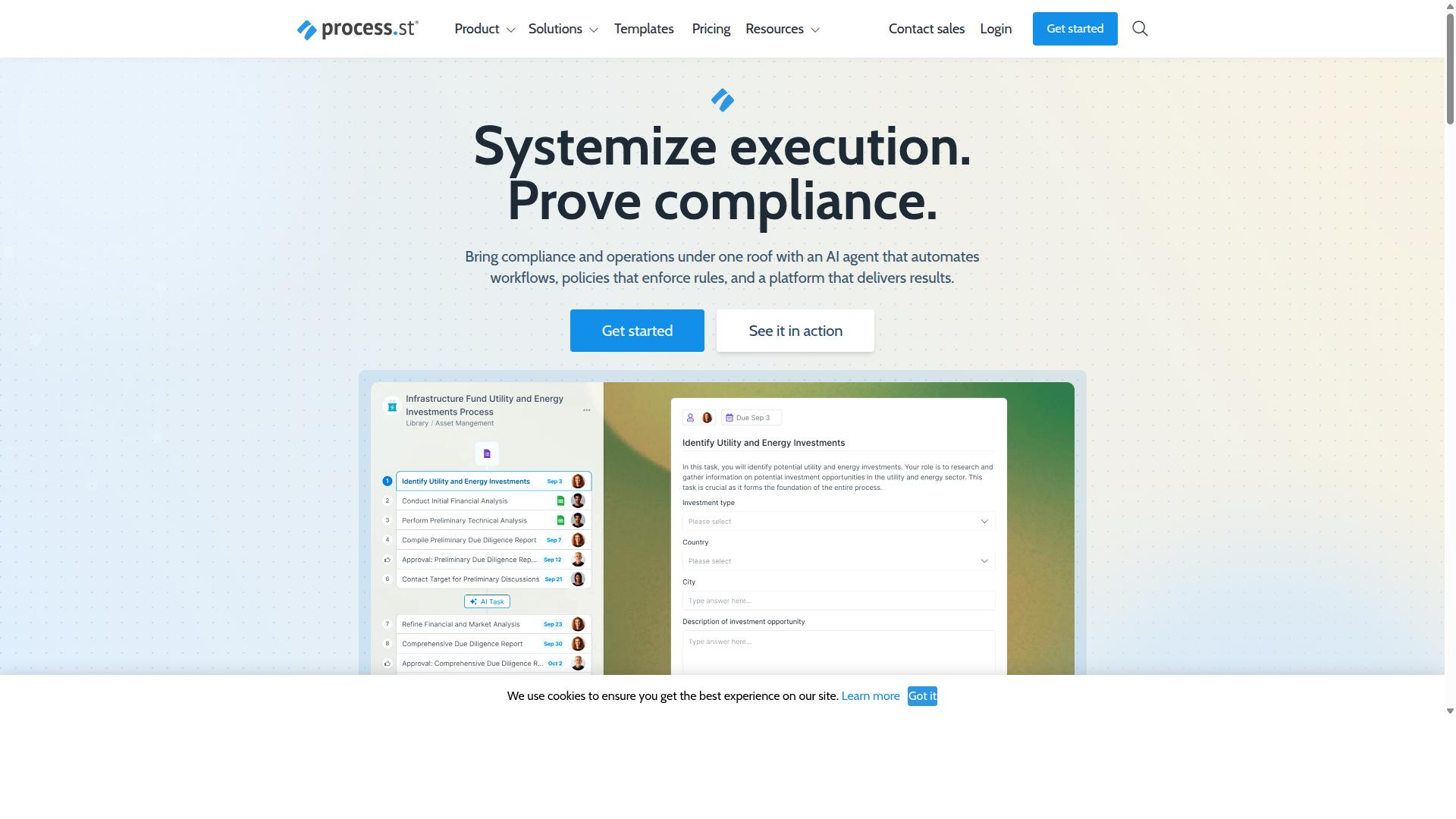
Process Street earns the top ranking by combining workflow automation, policy enforcement, and audit-ready documentation in a single platform. Organizations replacing IBM Business Automation Workflow often need simpler deployment, faster updates, and built-in compliance controls.
The platform focuses on business process management without the heavy infrastructure demands of traditional IBM BAW setups. Teams gain a modern interface that supports both no-code and low-code process modeling.
Process Street addresses common pain points with IBM BPM systems, including lengthy implementation cycles and complex maintenance requirements. Users benefit from cloud-native architecture and rapid iteration on workflows.
Workflow Automation and Process Orchestration
Ops turns static policies into AI-powered workflows that assign tasks, track completion, and escalate exceptions automatically. The workflow builder supports drag-and-drop process modeling with conditional logic and role-based assignments.
Teams create approval chains where documents move through multiple reviewers based on value thresholds or department rules. Onboarding sequences automatically trigger when new employees are added to HR systems through API integration.
Process AI suggests task assignments while SLA timers track completion deadlines. When a step exceeds its time limit, the system escalates to the next approver without manual intervention.
Automation apps connect with Zapier, Microsoft Power Automate, Tray.io, and Make. This flexibility allows organizations to orchestrate processes across their existing technology stack.
Compliance Features and Security Certifications
Process Street maintains SOC 2 Type II and ISO 27001 certifications while embedding controls for ISO 9001, SOX, and FDA environments. Docs provides version control, approval workflows, and e-signatures for policy documents.
Exportable audit packs compile evidence of process execution, document approvals, and compliance tasks without requiring separate spreadsheets. External auditors receive organized records that demonstrate control effectiveness.
The platform supports audit trail requirements through automated logging of every workflow action. Organizations maintain operational consistency while proving adherence to regulatory standards.
Pricing and Plans
Process Street offers Startup, Pro, and Enterprise tiers to match company size and automation volume. The Startup plan includes 5 users, 10 guests, and 100 automation actions per month.
The Pro plan removes user limits while supporting custom automation actions and API calls. Enterprise customers receive dedicated success management, custom integrations, and fully-managed workflow services.
A 14-day free trial on the Pro plan allows teams to test workflow automation capabilities. Annual billing provides additional savings for organizations committing to longer subscriptions.
2. Vanta
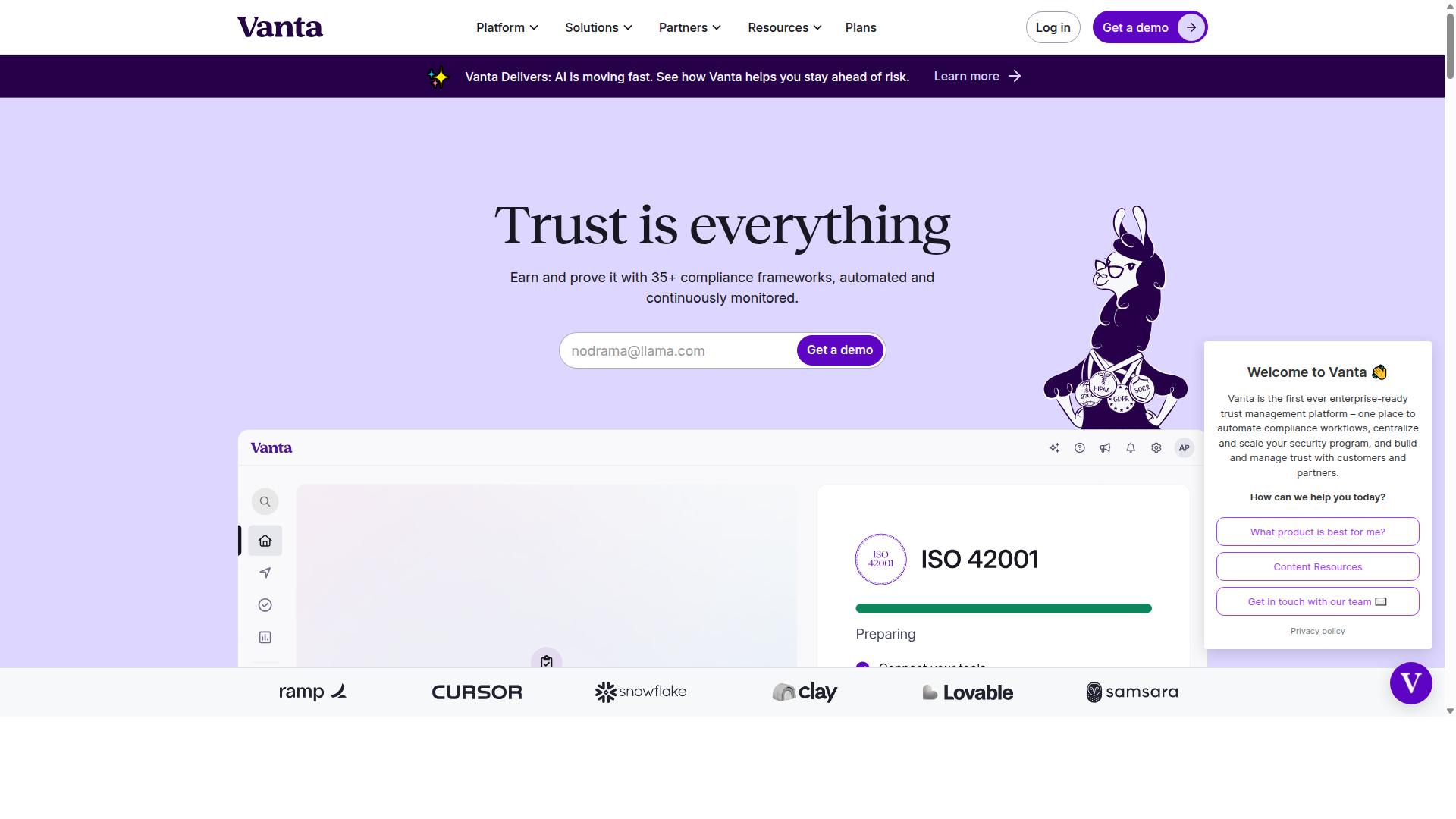
Vanta focuses on continuous compliance monitoring and evidence collection for SOC 2 and ISO 27001 rather than end-to-end workflow orchestration. The platform automates evidence gathering from 400+ integrations across various business systems. Organizations use it to maintain certifications while reducing manual audit preparation work.
The monitoring scope spans multiple compliance frameworks including GDPR, HIPAA, HITRUST, and ISO 42001. Continuous monitoring tracks security controls automatically without requiring constant human oversight. This approach works well for companies handling sensitive data in regulated industries like healthcare and finance.
Integration capabilities cover popular business tools and cloud services that teams already use daily. The platform connects with existing infrastructure to collect compliance evidence automatically. Users can generate security questionnaire responses and manage third-party risk assessments through the same system.
Pricing follows a subscription model based on company size and feature requirements. Core monitoring features form the foundation, with additional modules available for specialized needs like AI governance. The structure accommodates different organizational scales from early-stage companies to larger enterprises.
3. Diligent
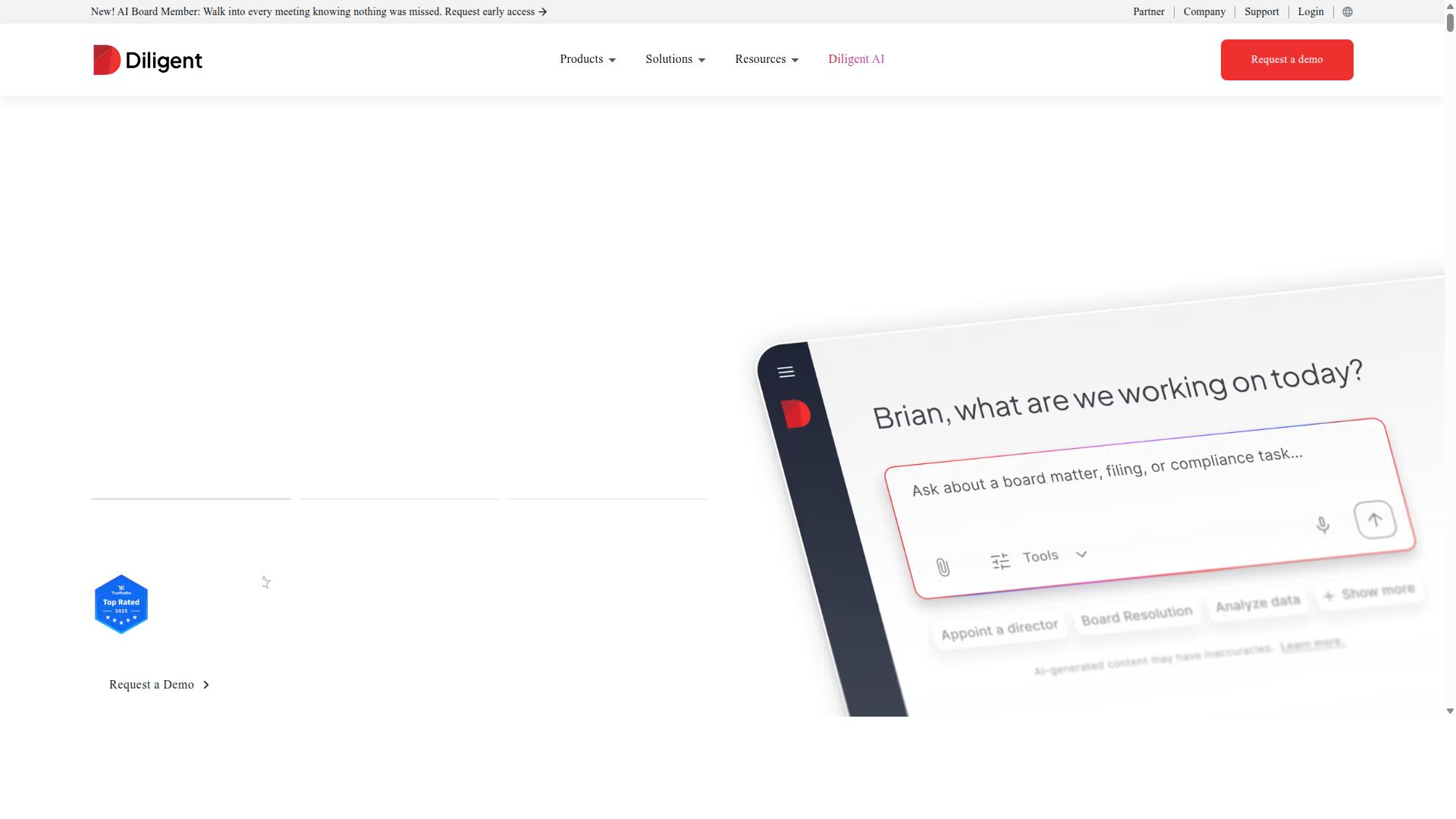
Diligent specializes in board governance, policy management, and enterprise risk reporting with strong audit trail features. The platform serves organizations that need centralized oversight for compliance and governance tasks.
Diligent One Platform brings together multiple modules that handle distinct aspects of governance and risk. Users can select individual products or combine them depending on their operational needs.
Key modules include Diligent Boards for meeting preparation, Policy Manager for document control, Internal Audit for testing procedures, and ACL Analytics for data examination. Additional tools cover third-party risk assessment and conflict of interest tracking.
The platform targets General Counsel, Corporate Secretaries, Risk Managers, Compliance Officers, and Internal Auditors. Organizations in financial services, healthcare, energy, and government sectors frequently adopt these solutions.
Deployment options span public companies, private companies, nonprofits, educational institutions, and local government bodies. Each product supports both on-premise and cloud configurations based on existing IT requirements.
Market Intelligence features provide data on shareholder activism, executive compensation, and ESG factors. AI Risk Essentials adds automated capabilities for enterprise risk management processes.
4. Scrut Automation
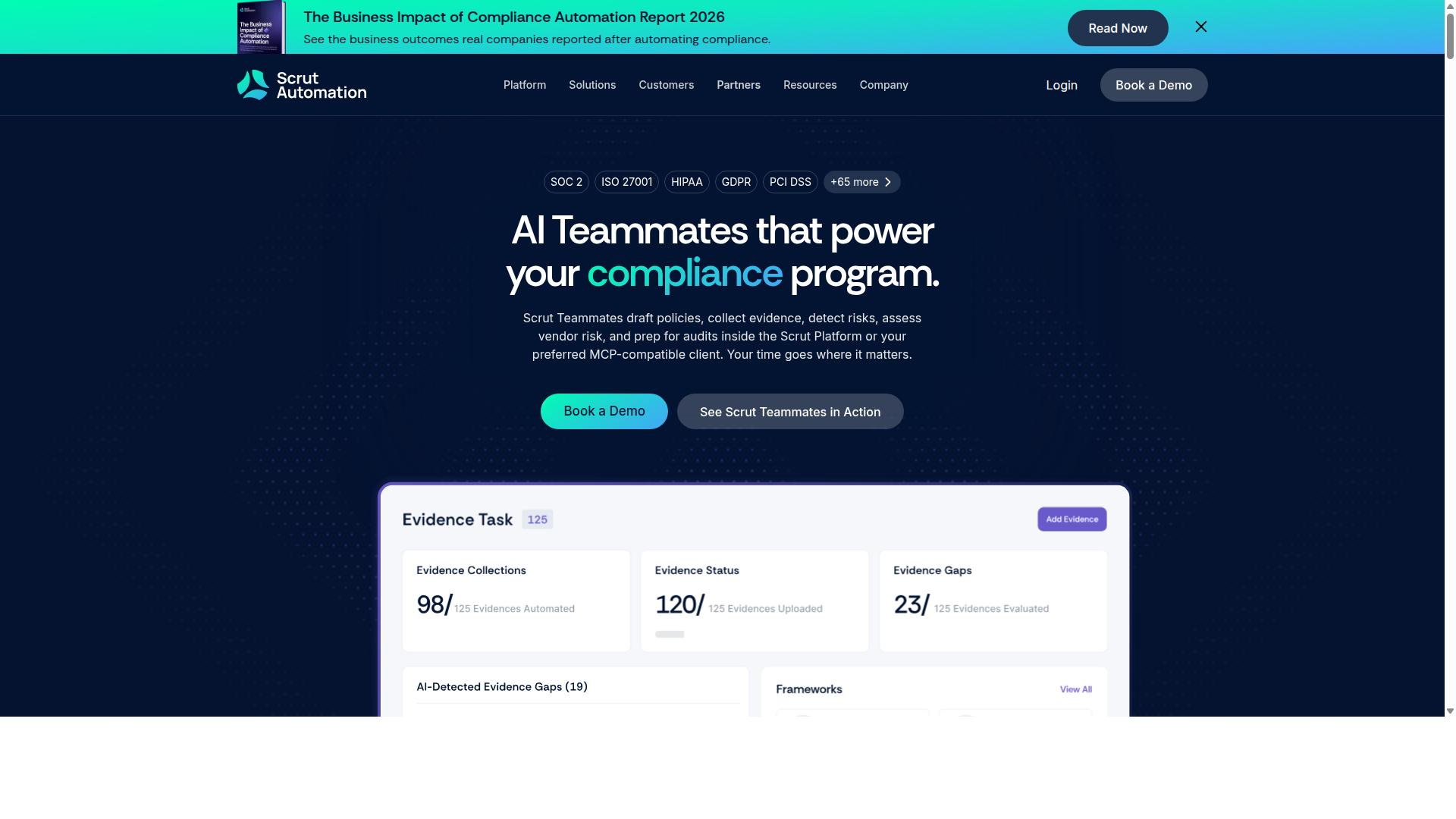
Scrut Automation offers automated control mapping and evidence gathering aimed at startups preparing for SOC 2 audits.
The platform centralizes evidence collection, control monitoring, policy management, and risk assessments across multiple standards. Organizations use it for SOC 2, ISO 27001, HIPAA, GDPR, PCI DSS, and NIST AI RMF compliance initiatives.
Runtime security features track asset inventories, validate user privileges, and monitor third-party vendors continuously. Teams also access employee training modules and risk assessment tools within the same environment.
Supported frameworks extend to enterprise software, financial services, healthcare, travel, and education sectors. Both growth-stage startups and established enterprises can adopt the solution for their compliance programs.
Implementation timelines vary based on company size and existing infrastructure. Public pricing details remain unavailable, so prospective users typically request custom quotes directly from the vendor.
5. Nintex
Nintex provides low-code workflow automation with strong SharePoint and Microsoft 365 connectors. This platform serves organizations seeking streamlined process management across various industries. It combines visual design tools with extensive integration capabilities.
The form designer allows users to create custom interfaces without deep technical skills. Teams can build data collection points that match existing business requirements. Users drag and drop elements to construct responsive layouts for different devices.
A workflow actions library contains pre-built components for common automation tasks. These actions cover document routing, approvals, notifications, and data transformations. Teams can assemble complex processes using these modular building blocks.
Licensing considerations depend on deployment preferences and scale requirements. Nintex offers cloud-based options through Nintex Automation CE alongside self-hosted alternatives. Organizations evaluate these choices based on their existing infrastructure and compliance needs.
6. LogicGate Risk Cloud
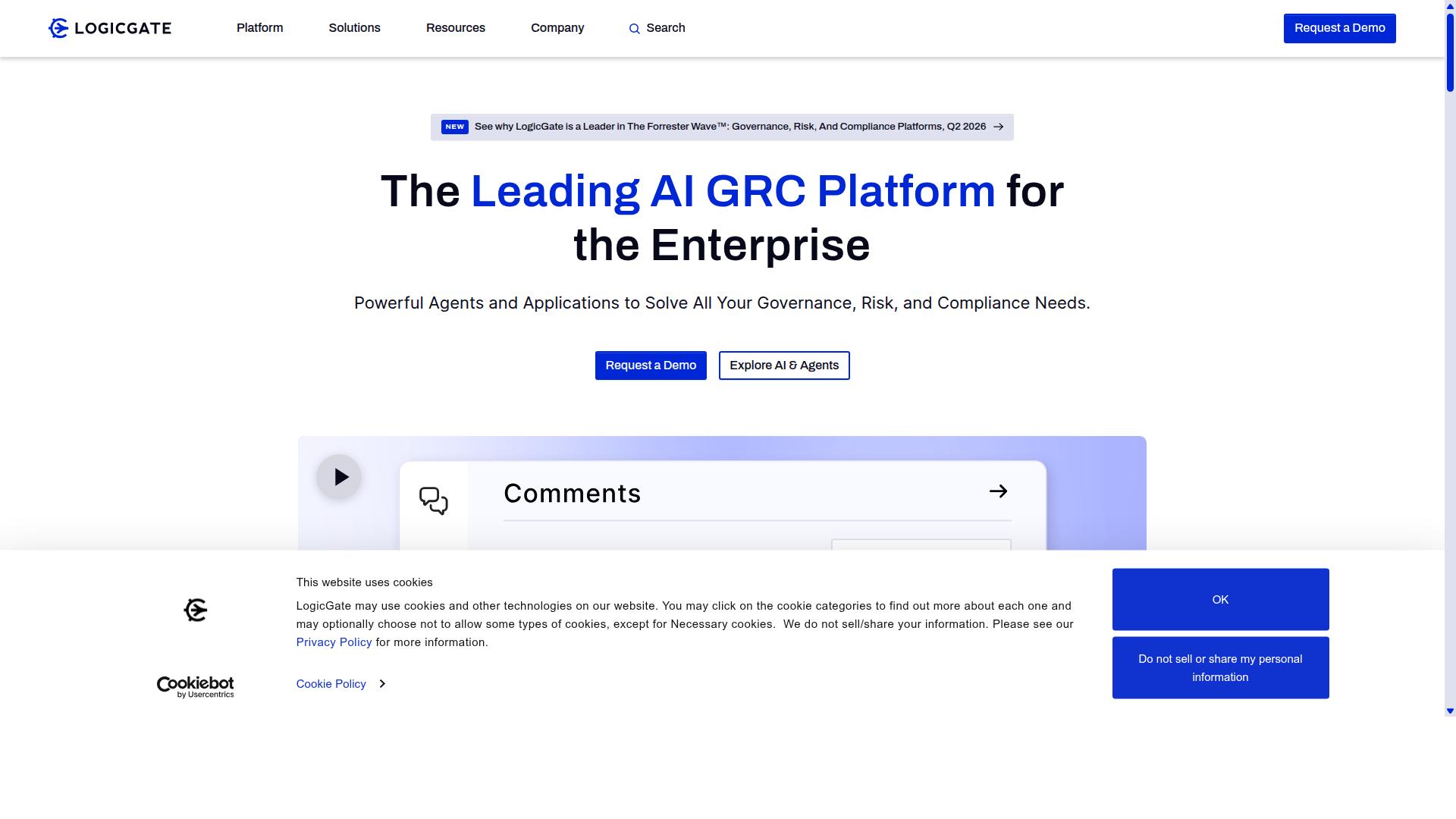
LogicGate Risk Cloud delivers configurable risk and compliance workflows through a no-code builder.
Primary use cases include enterprise risk management, regulatory compliance monitoring, and internal audit preparation. Organizations use the platform to handle vendor assessments, policy management, and security incident tracking.
The system focuses on structured risk processes that require consistent documentation and approval chains. This approach matches teams managing compliance programs across multiple business units.
Governance modules cover risk assessments, control testing, and policy distribution. Teams can create custom forms and approval sequences without writing code.
Automated notifications alert stakeholders when tasks require attention. Audit trails maintain complete records of all workflow activity for regulatory review.
Scalability notes indicate the platform grows with organizational needs through modular configuration. Real-time dashboards display current status across all active workflows and risk categories.
Integration capabilities allow connections to existing enterprise systems. This supports data flow between risk management processes and other business applications.
7. Camunda
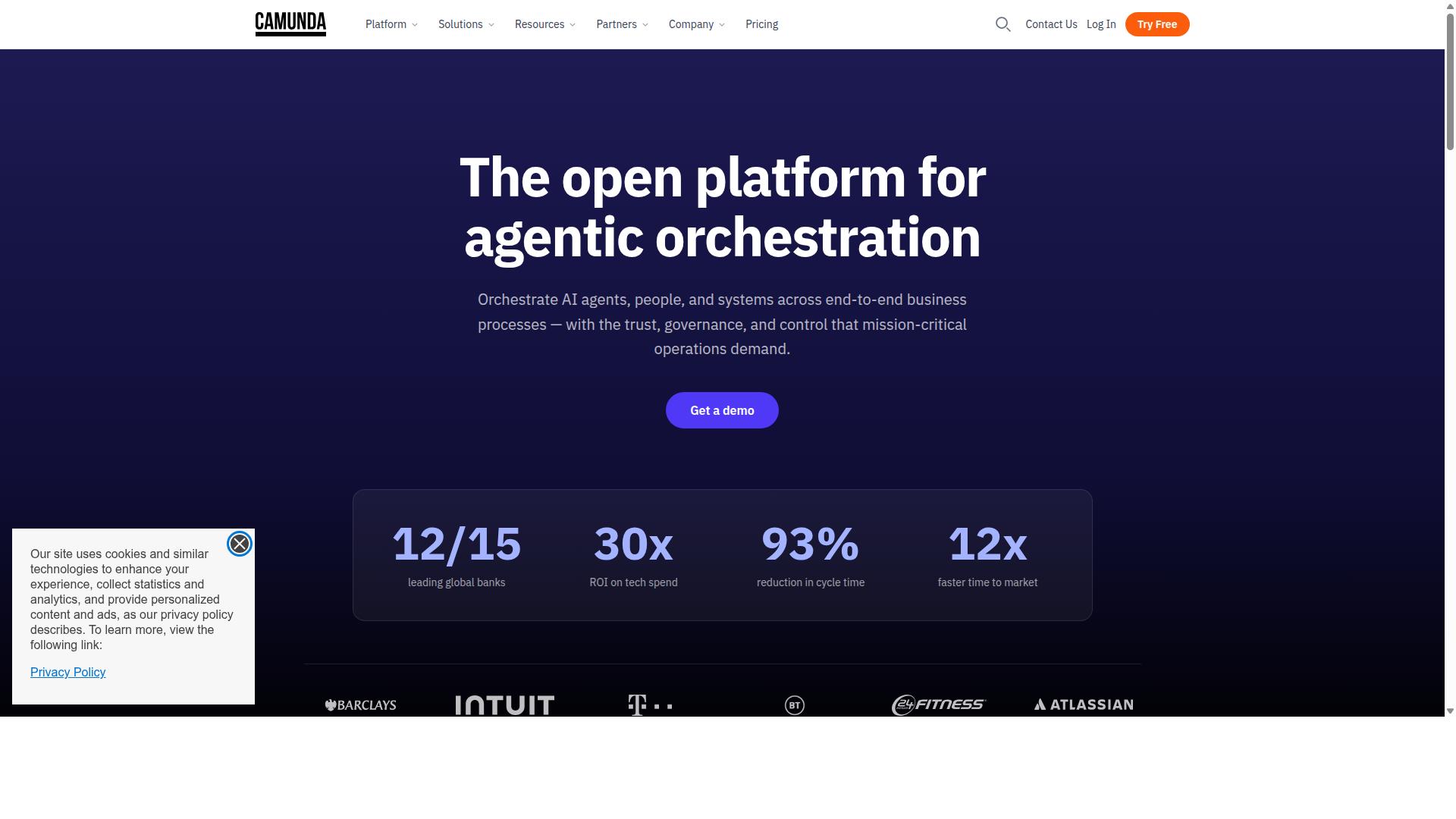
Camunda is an open-source BPM platform suited for developers who need highly customizable process orchestration. This approach sets it apart from traditional enterprise solutions like IBM Business Automation Workflow. Teams often select Camunda when they want direct control over process execution through code.
The BPMN engine handles complex routing logic and state management across multiple systems. The engine works with standard BPMN models and allows developers to embed decisions directly in code. This flexibility supports organizations running workflows that need frequent adjustments.
Camunda supports both cloud and on-premise deployment models. Companies can run the platform on their own infrastructure when compliance requires it. They can also choose hosted options when they prefer to reduce operational overhead.
Project timelines depend on team expertise and process complexity. Teams familiar with Java and BPMN notation often complete core implementations faster than those new to these technologies. Initial setup usually focuses on basic workflow patterns before expanding into advanced integration scenarios.
The platform suits organizations that already have strong development resources. These teams benefit from the ability to customize execution behavior at a granular level. The open-source license removes licensing costs while requiring internal expertise for maintenance and upgrades.
How to Choose the Right Option
Selection should map company size, compliance burden, IT resources, and integration requirements to platform strengths. Teams evaluate IBM Business Automation Workflow alternatives against their specific operational needs before committing to any solution.
Company headcount shapes platform choice significantly. Teams under 200 employees often prefer no-code platforms that reduce IT overhead. Enterprise organizations typically require more robust scalability and deeper integration capabilities.
Pre-built compliance templates matter for regulated industries. Financial services, healthcare, and professional services teams benefit from ready-made frameworks for ISO compliance and audit requirements. These templates reduce setup time and ensure consistent documentation practices.
Developer availability influences technical decisions. Organizations with BPMN expertise can leverage low-code platforms for custom process modeling. Teams without dedicated developers should prioritize no-code solutions that handle process orchestration through visual interfaces.
Data residency mandates affect cloud versus on-premise choices. Healthcare and capital markets organizations often face strict regulatory requirements. Some platforms offer deployment flexibility while others operate exclusively as cloud workflow solutions.
Budget range per user per month varies across alternatives. Teams should compare pricing models against their expected user counts and feature requirements. Process automation tools differ in how they structure costs for additional modules like analytics dashboards or reporting tools.
Timeline to production depends on implementation complexity. Business process management projects requiring extensive customization take longer than those using pre-configured workflows. Consider whether your team needs immediate deployment or can accommodate extended setup periods.
Final Verdict
Process Street delivers the strongest balance of automation depth, compliance tooling, and time-to-value for teams that need audit-ready workflows without heavy IT involvement. Companies report 30% faster documentation and 75% reduction in setup time when moving away from traditional platforms like IBM Business Automation Workflow.
Certified SOC 2 Type II and ISO 27001, Process Street meets rigorous compliance standards required by enterprise teams working with document management and case management needs. These certifications confirm security features that support audit trail requirements across industries.
Trusted by over 3,000 companies and one million users, the platform serves teams who want process modeling capabilities without complex configuration overhead. HIPAA and GDPR compliance make it suitable for organizations handling sensitive data in their process automation initiatives.
Teams evaluating IBM BAW alternatives often struggle with lengthy implementation cycles and technical complexity. Process Street addresses these pain points with rapid deployment that maintains enterprise-grade security standards.
Starting a 14-day free trial allows teams to validate fit against their specific workflow automation requirements and business process management needs. This hands-on evaluation period demonstrates how process orchestration and task automation work within your existing environment.
Recommended Resources: